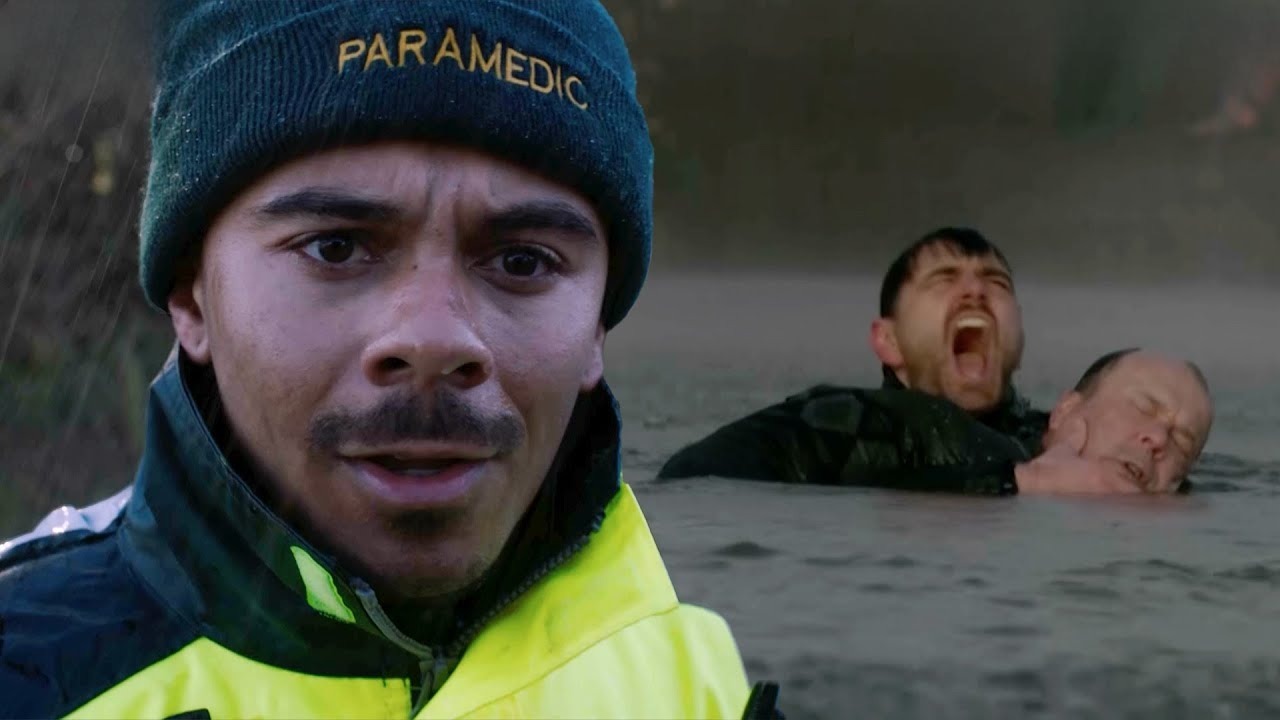
Casualty: A Paramedic Risks His Life As Storm Damage Turns A Rescue Into A Nightmare
When a powerful storm leaves destruction in its wake, emergency crews are often the first people expected to enter the danger zone. But for the paramedics of Casualty, one rescue quickly becomes a terrifying reminder that saving someone else’s life can mean putting your own on the line.
With storm damage creating unpredictable hazards, a routine emergency response can suddenly become a fight against collapsing structures, dangerous debris and rapidly changing conditions. As the pressure rises, one paramedic is forced to make a decision that could have devastating consequences.
A Storm Turns The Emergency Into A Disaster Zone
Storms can transform familiar surroundings into something almost unrecognisable. Roads become blocked, buildings can be damaged and seemingly harmless objects can become deadly obstacles.
For the emergency teams responding to the aftermath, the biggest challenge is often not knowing what they will find when they arrive.
That uncertainty gives this Casualty storyline its immediate tension.
The paramedics are trained to assess danger, protect themselves and their colleagues, and provide urgent medical treatment. But when a patient is trapped or placed in immediate danger, professional instincts can collide with the knowledge that every additional step into a hazardous area could put another life at risk.
This is where the rescue becomes personal.
A Paramedic Makes A Dangerous Choice

At the heart of the story is a paramedic who refuses to stand back when someone desperately needs help.
The decision to move closer to danger is not presented as simple heroism. It is a deeply complicated professional choice.
Paramedics are expected to take risks, but those risks have limits. Entering an unstable environment could turn one casualty into two, leaving an already stretched emergency team with an even greater crisis.
Yet when seconds matter, hesitation can also have consequences.
The paramedic’s decision therefore becomes one of the most gripping aspects of the storyline. Is it possible to follow every safety procedure when a person’s life is hanging in the balance?
And what happens when doing the right thing means knowingly putting yourself in harm’s way?
The Damage Left Behind By The Storm
The storm itself becomes almost like another character in the drama.
Rather than simply providing a backdrop, the destruction creates a constantly changing threat. Debris can shift without warning. Structures that appear stable may not be. Emergency access can become difficult, while communication and coordination may be placed under additional pressure.
For the medical team, that means there is no straightforward route to safety.
Every movement has to be considered.
The paramedic must think about the patient, the surrounding environment and the colleagues depending on them. One wrong decision could affect everyone at the scene.
That tension allows Casualty to explore something it does particularly well: the thin line between bravery and recklessness.
The Patient Becomes The Priority
Despite the danger, the patient’s condition remains the central concern.
For the paramedic, the person in trouble is not simply another emergency call. Once the team reaches the scene, the patient becomes someone whose life may depend on their ability to remain calm under extraordinary pressure.
That emotional connection can make dangerous decisions even harder.
A paramedic may know intellectually that entering an unstable area is unsafe. But watching someone suffer can make standing back almost impossible.
The storyline highlights the emotional burden carried by emergency workers who have to make life-or-death decisions in moments when there is no perfect answer.
Colleagues Could Be Forced To Intervene
One of the most compelling elements of an emergency storyline is the relationship between the people working together.
A paramedic may be willing to take a risk, but their colleagues are unlikely to simply watch if the situation becomes too dangerous.
That could create a tense confrontation at the scene.
The team may have to decide whether to pull their colleague back, find another way to reach the patient or continue the rescue despite escalating danger.
For the paramedic, being ordered to stop could feel unbearable. From the perspective of the rest of the crew, however, protecting a colleague is just as important as protecting the patient.
It is a difficult balance, and the storm makes every decision more complicated.
Heroism Comes With A Price

Casualty has never treated emergency work as simple heroics.
Behind every dramatic rescue is the possibility of emotional consequences.
Even if the paramedic succeeds, the experience could leave a lasting psychological impact. Knowing that one wrong move could have resulted in serious injury or death can stay with someone long after the emergency has ended.
That is especially important because emergency workers are expected to move immediately from one crisis to another.
There is rarely enough time to process what has just happened.
A successful rescue may therefore bring relief, but it does not necessarily erase fear.
The Incident Could Change How The Paramedic Sees The Job
The experience may also force the paramedic to reconsider what it means to be responsible for another person’s life.
Taking risks is part of emergency medicine, but there is a crucial difference between calculated risk and putting yourself in unnecessary danger.
After the storm, questions could follow.
Was the decision justified? Could the patient have been saved another way? Did the paramedic go too far? And would they make the same choice again?
Those questions could create an emotional storyline that continues beyond the immediate rescue.
The Hospital Could Feel The Fallout
Once the patient reaches the hospital, the drama does not necessarily end.
The medical team may have to deal with injuries caused by the storm, while colleagues process what happened at the scene.
A dangerous rescue could also expose disagreements about procedure and responsibility.
One person may see the paramedic as a hero. Another may believe the decision was dangerously irresponsible.
Both perspectives can exist at the same time.
That moral uncertainty gives the story greater weight and prevents the rescue from becoming a straightforward tale of triumph.
Casualty Shows The Human Side Of Emergency Work
What makes this storyline particularly powerful is that the storm is only part of the story.
At its centre is a group of people trying to help others while dealing with their own fear.
The paramedic’s courage matters, but so does the concern of the colleagues who refuse to let one of their own become another casualty.
That sense of teamwork is fundamental to the world of Casualty. Emergency medicine is rarely about one person acting alone. It depends on trust, communication and the willingness to rely on others when circumstances become overwhelming.
A Rescue That Could Leave A Lasting Mark
By the time the immediate danger passes, the paramedic may have saved a life — but the experience could change them forever.
The storm exposes just how quickly an ordinary emergency can become catastrophic. It also demonstrates why emergency workers must constantly balance compassion with caution.
For viewers, the storyline offers more than an action-packed rescue. It raises difficult questions about courage, responsibility and the price of putting someone else first.
What Happens Next For The Paramedic?
The aftermath could prove just as important as the rescue itself.
Will the paramedic be praised for taking a potentially life-saving risk, or questioned for putting themselves and their colleagues in danger? Could the incident affect their confidence, relationships or approach to future emergencies?
And most importantly, will they still believe the decision was worth it?
With the storm leaving destruction behind and emotions running high, this Casualty storyline promises to remind viewers why the work of emergency crews is so unpredictable — and why sometimes the greatest danger begins just when they think they have arrived to help.