HOLLYWOOD, CA — Not so long ago, westerns were considered a forgotten artifact of Hollywood’s golden age—a genre relegated to dusty late-night television re-runs and niche film festivals. Then came Taylor Sheridan. With the explosive rise of Yellowstone, the Oscar-nominated creator single-handedly resurrected the American Western, transforming it into a multibillion-dollar prestige TV empire that redefined modern entertainment.
However, as Paramount prepares to unleash its newest trio of interconnected series—Dutton Ranch, Marshals, and The Madison—a lingering question hangs over television executives, critics, and audiences alike: Is this masterclass franchise expansion, or are we hurtling toward total cowboy overload?

The Architecture of an Empire
When Yellowstone first premiered, it was an anomaly—a gritty, uncompromising portrait of family dynamics, land preservation, and raw frontier justice. Over five seasons and multiple record-breaking prequel series like 1883 and 1923, Sheridan proved that audiences had an insatiable appetite for his cinematic vision of the West.
Yet, managing a single mega-hit is fundamentally different from sustaining an interconnected universe. For years, Hollywood studios have chased the elusive “cinematic universe” model perfected by Marvel. But where superheroes rely on cosmic portals and multiverses, westerns rely on authentic dirt, real cattle, human blood, and emotional stakes.
With three distinct series firing on all cylinders simultaneously, Paramount is testing the absolute limits of how much western television a single audience can consume before fatigue sets in. To understand whether this expansion will succeed, one must analyze how each show carves out its own territory.
A Tale of Three Spinoffs: Identity vs. Brand Equity
To prevent audience burn-out, the producers have deliberately constructed three projects that target radically different narrative tones, character dynamics, and demographic niches.
- Dutton Ranch: The Core Legacy Keepers
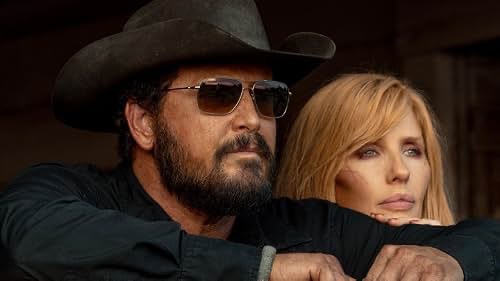
Serving as the direct spiritual and narrative successor to the original Yellowstone saga, Dutton Ranch carries the core brand identity forward. Centered on fan-favorites Beth Dutton (Kelly Reilly) and Rip Wheeler (Cole Hauser) as they establish a new frontier in Texas, the series stays true to the franchise’s original DNA: high-stakes land disputes, explosive family feuds, and classic, brutal frontier violence. It is built specifically for the hardcore purists who demand bunkhouse drama, cowboy ethics, and unapologetic power plays.
- The Madison: High-Class Emotional Prestige
Shifting the lens entirely away from dirty cowboy boots and cattle drives, The Madison explores a wealthy New York family setting up roots in Montana’s Madison River valley following a devastating tragedy. Starring heavyweight Hollywood legends like Michelle Pfeiffer and Kurt Russell, the series functions as a deeply emotional, fish-out-of-water human drama. It focuses on grief, human connection, and class culture clashes rather than land wars and gunfights—aiming squarely at viewers who prefer prestige, character-driven storytelling over raw action.
- Marshals: The High-Octane Tactical Procedural
Breaking away from ranching entirely, Marshals pivots into an adrenaline-pumping procedural thriller set against the vast backdrop of the American West. Starring David Oyelowo, the series follows the high-risk lives of modern U.S. Marshals enforcing the law in vast, lawless stretches of territory. By blending tactical law-enforcement drama with western grit, Marshals captures the procedural crime audience, offering episodic urgency and high-stakes lawkeeping rather than continuous land disputes.

Strategic Diversification or Franchise Fatigue?
On paper, this three-pronged strategy represents brilliant portfolio diversification. By giving each series a distinct tone—Dutton Ranch for classic western action, The Madison for prestige emotional drama, and Marshals for crime-procedural thrills—Paramount theoretically avoids delivering carbon copies of the same story.
Yet, entertainment history provides a stark warning. Franchises like Marvel, Star Wars, and The Walking Dead all experienced the harsh realities of viewer fatigue when content volume began to overwhelm narrative urgency. When an audience feels required to keep up with dozens of hours of television across multiple shows each year just to stay informed, watching a series risks turning from a passion into homework.
Furthermore, production budgets for Sheridan’s sweeping, location-heavy westerns are notoriously astronomical. Filming on practical ranches, handling thousands of real livestock, and securing top-tier Hollywood talent demands massive financial resources. If fatigue sets in and the audience fractures—splitting views across three titles instead of concentrating on a single culture-defining event—the return on investment could shrink rapidly.
The Creative Toll Behind the Camera
Beyond audience fatigue lies the equally dangerous threat of creative exhaustion. Taylor Sheridan’s legendary rise was built on his unmatched ability to write entire seasons single-handedly. However, as the universe swells, no individual writer can physically maintain that level of output without the narrative quality dipping.
The introduction of new creative leadership—such as Benjamin Cavell taking over showrunning duties on Dutton Ranch—is a necessary evolution. For the franchise to survive long-term, Sheridan must delegate the reins to world-class storytellers who can maintain his tone while bringing fresh energy to the writers’ room.
If these creative teams can maintain the sharp dialogue, grounded realism, and relentless tension that made Yellowstone a cultural phenomenon, each show will stand comfortably on its own two feet. But if the plots begin to rely on recycled tropes, predictable melodrama, and artificial cliffhangers, the entire empire risks collapsing under its own weight.
The Final Verdict: Can the Empire Hold the Reins?
The ultimate deciding factor in this high-stakes television gamble will not be the raw quantity of shows, but the consistency of their soul. Yellowstone originally succeeded because it tapped into something visceral: a mythic, romanticized, and unapologetic fight for land, family, and personal freedom in a changing modern world.
If Dutton Ranch, The Madison, and Marshals can respect their audience by delivering fiercely distinct, high-quality narratives, Sheridan will prove once again that the American West is vast enough to hold multiple kingdoms. But if the empire expands too fast and loses its grounded authenticity, even the most loyal cowboy fans may decide it’s finally time to tip their hats, step off the porch, and walk away.