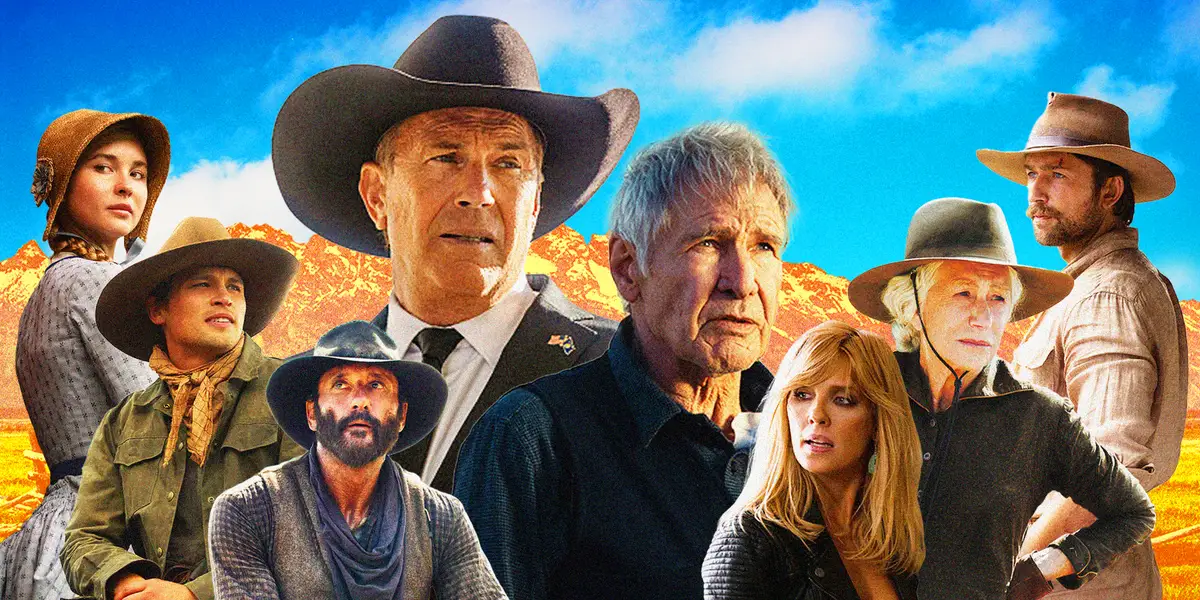
When news first broke that Taylor Sheridan’s sprawling Western television universe was expanding further into Texas with Dutton Ranch, the immediate, collective reaction from the fandom was predictable.
Television forums, social media circles, and industry pundits instantly began spinning a web of nostalgic speculation. Viewers demanded to know which iconic figures from the flagship series Yellowstone would be making high-profile crossover appearances. Would Rip Wheeler (Cole Hauser) bring his iron-fisted, dark-branded brand of frontier justice to the Lone Star State? Would Beth Dutton (Kelly Reilly) stride into Texas boardrooms in high heels to execute corporate liquidations? Would Kayce Dutton (Luke Grimes) bring his stoic combat-veteran energy to the southern plains?

It is an understandable impulse in the modern era of franchise storytelling. Audiences have been conditioned by cinematic universes and prestige television spin-offs to treat new series as glorified delivery mechanisms for familiar faces and legacy callbacks.
Yet, as Dutton Ranch establishes its own narrative rhythm, an uncomfortable, crucial truth is coming into sharp focus: the new series does not need the old heroes of the Yellowstone estate.
In fact, severing the umbilical cord to John Dutton’s legacy and stepping out from the long, suffocating shadow of Paradise Valley isn’t just a creative option for Dutton Ranch—it is the single most vital structural strategy that could allow the show to achieve true narrative greatness.
The Trap of Nostalgic Franchise Reliance
To understand why relying on original Yellowstone icons would ultimately poison the well for Dutton Ranch, one must analyze the narrative burden those characters carry.
By the time the flagship series reached its dramatic high-water marks, characters like Beth, Rip, and Kayce had become larger-than-life myths. They were no longer grounded working cowboys or complex human beings wrestling with modern land economics; they were superhero-adjacent archetypes operating in an increasingly heightened, gothic-Western reality.
If Dutton Ranch were to import these seasoned titans into its Texas canvas on a permanent or recurring basis, it would create a catastrophic creative imbalance:
-
The Overshadowing Effect: A single scene featuring Rip Wheeler handing down orders or Beth launching a verbal tirade instantly sucks the oxygen out of the room. It forces new, developing characters into passive spectator roles, reducing them to mere background hands in their own story.
-
Stagnant Character Development: The legacy figures from Montana have already completed massive, multi-season emotional arcs. Bringing them back forces writers to either reset their character growth for cheap conflict or trap them in predictable, fan-service loops where they simply repeat their iconic catchphrases and physical beats.
-
Diminishing the Stakes: If every major conflict in Texas can be solved by calling in the battle-tested enforcers from Montana, the immediate tension facing the new Texas crew evaporates completely.
A Blank Slate for Texas Realism
By choosing to lean into a fresh roster of characters—pioneered by raw talents, seasoned character actors, and complex newcomers—Dutton Ranch gives itself the rare gift of high stakes.
When a show features brand-new characters whose moral codes, physical limits, and ultimate survival are completely unwritten, the audience loses the security blanket of franchise plot armor. In the unforgiving brush country of Texas, anyone can make a fatal mistake, anyone can break under pressure, and anyone can lose their land.

This creative independence allows Dutton Ranch to explore fresh, unvarnished themes that the original series eventually outgrew:
-
The Modern Working-Class Struggle: Without the multi-billion-dollar corporate political empire of John Dutton backing every play, the hands and managers on the Texas frontier face real, unromanticized economic anxieties. They are fighting for daily survival, dealing with actual livestock market fluctuations, water rights disputes, and the grueling reality of heat-stricken ranching.
-
Unpredictable Moral Trajectories: New figures bring unwritten loyalties. Rather than starting with a group of ride-or-die loyalists bound by a sacred brand, Dutton Ranch can slowly build genuine, messy, and earned camaraderie among strangers, wanderers, and independent day-hands who have no inherent allegiance to a single family name.
-
Flawed, Unproven Leaders: Swapping out the absolute authority of the old Montana patriarchs for younger, conflicted, or untested leaders creates immediate, organic narrative friction. Watching a new leader earn respect through failure, sweat, and hard choices is vastly more compelling than watching an established legend issue decrees from a porch chair.
Honoring the Legacy Through Evolution, Not Imitation
Stepping away from the original heroes is not an act of disrespect toward Yellowstone; it is the ultimate tribute to why Taylor Sheridan’s universe captured global imagination in the first place.
When Yellowstone premiered, it didn’t succeed because it relied on pre-existing nostalgia or familiar television tropes. It blew up into a global cultural phenomenon precisely because it introduced audiences to an unfamiliar, morally complex world filled with fresh, dangerous, and fascinating characters they had never seen before.
Dutton Ranch has the exact same opportunity. By refusing to turn into a nostalgic victory lap for the Montana crew, the show honors the spirit of the original by daring to build something new from the dirt up.
The Texas setting provides a completely different cultural, geographical, and operational palette—from the specialized world of cutting horses and heat-tolerant cattle breeds to the distinct, historic culture of Southern range hands. Trying to force Montana dynamics onto Texas soil would be like forcing a round peg into a square post hole.
The Freedom to Build a New Empire
Great television franchises—from The Wire to Better Call Saul—understand that world-building requires the courage to let new stories breathe without constantly winking at the past.
Dutton Ranch stands at a glorious creative crossroads. It possesses the massive production values, atmospheric score, and sharp, cinematic direction that fans expect from the Sheridan universe, but it carries none of the narrative baggage that bogged down the late-stage Montana wars.
The show doesn’t need Rip’s branded iron, Beth’s corporate warfare, or John Dutton’s political throne. It has the vast, sun-baked horizon of Texas, a blank ledger of human drama, and an entire roster of new characters waiting to prove what they are made of.
If Dutton Ranch continues to trust its own identity and let its new roster run free, it won’t just stand on its own two feet—it might just surpass the giants that came before it.