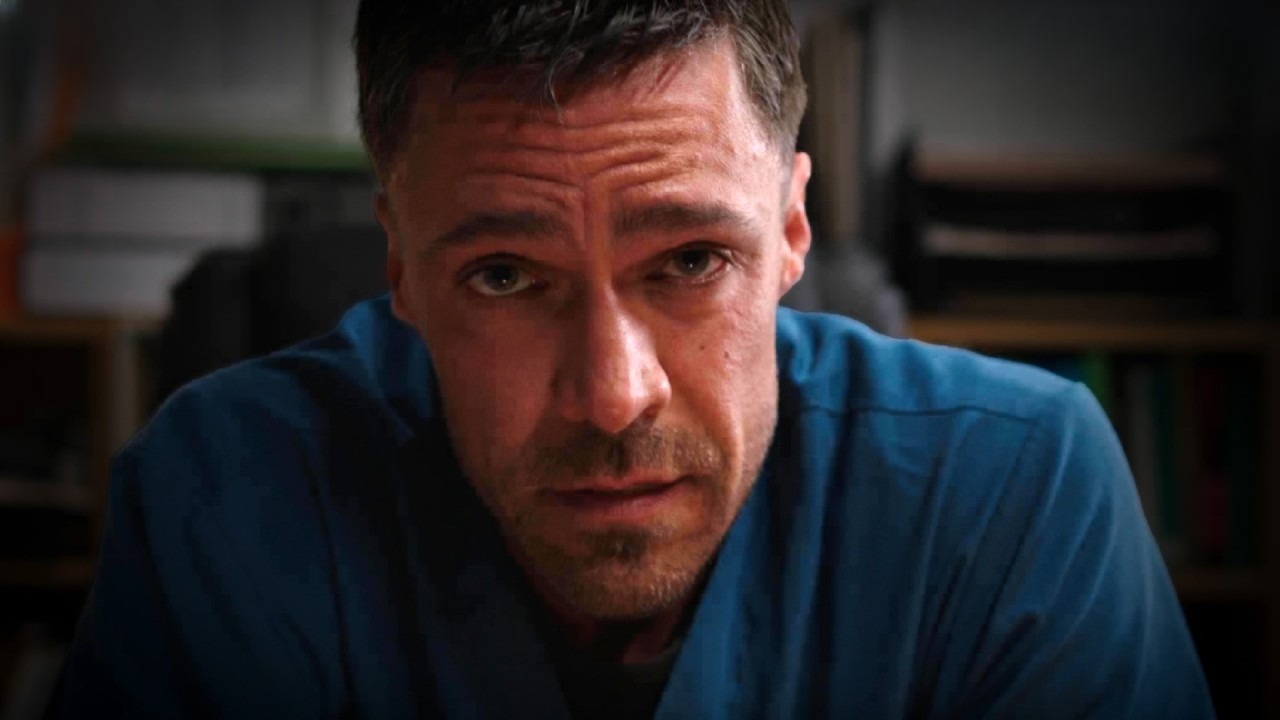
Casualty: Army Assistance Arrives As ED Faces A Respiratory Crisis
A Medical Emergency Pushes The ED To Its Limits
Casualty turns the pressure up another level as the emergency department faces a respiratory crisis that threatens to overwhelm staff, patients and every available resource.
When a sudden wave of critically ill patients arrives needing urgent respiratory support, the ED quickly becomes a battlefield of its own. Doctors and nurses are forced to make rapid decisions, prioritise the sickest patients and work under conditions where there is little room for error.
But this time, the hospital needs more than medical expertise.
With the crisis escalating, army assistance arrives to help support the response. Their presence immediately signals just how serious the situation has become. What initially looks like another difficult shift at the hospital soon develops into a major emergency, placing enormous pressure on the clinical team.
For the staff at the heart of Casualty, this is not simply about treating individual patients. It is about keeping the entire department functioning while the number of people needing urgent care continues to rise.
Respiratory Patients Leave Staff Fighting Against Time

Respiratory emergencies are among the most frightening situations an emergency department can face because a patient’s condition can deteriorate within minutes.
That reality becomes painfully clear as the ED struggles to cope with the scale of the crisis. Patients arrive struggling to breathe, while staff race to assess symptoms, deliver oxygen and determine who requires immediate intervention.
Every decision carries consequences.
Doctors must balance the needs of patients who are already critically ill with those who could deteriorate without warning. Nurses are pushed into an increasingly demanding environment, while the wider hospital system comes under pressure to find beds, equipment and personnel.
The tension creates the kind of atmosphere Casualty does best: one where medical professionalism is constantly tested by human fear.
For patients and their families, the hospital is supposed to represent safety. But during a crisis of this magnitude, even the ED begins to feel dangerously unpredictable.
Army Assistance Changes The Scale Of The Emergency
The arrival of military assistance adds a striking new dimension to the storyline.
Rather than replacing the medical team, the additional support highlights the extraordinary scale of the emergency. When outside resources are required simply to help the hospital maintain order and cope with demand, it becomes obvious that this is no ordinary shift.
For the doctors and nurses, however, there is little time to process what the arrival means.
They still have patients to treat.
They still have decisions to make.
And they still have to remain calm in front of frightened families.
The military presence also creates an unusual dynamic inside the hospital. Medical staff are accustomed to working alongside colleagues from different departments, but an emergency requiring wider operational support forces everyone to adapt quickly.
It becomes a test of communication as much as clinical skill.
The Emotional Cost Of Keeping Patients Alive
Behind every medical emergency is a human story, and the respiratory crisis threatens to take an enormous emotional toll on the people working through it.
Doctors can rely on training and experience, but neither can completely shield them from the emotional impact of seeing patients struggle for breath.
For some members of staff, the crisis may trigger memories of previous cases. For others, the relentless pressure creates exhaustion that becomes increasingly difficult to hide.
That is where the personal drama begins to collide with the medical emergency.
A doctor may have to move immediately from one patient to another without having time to process what happened to the first. A nurse may be forced to deliver difficult information to a family before returning straight to the next emergency.
There is no opportunity to pause.
In the ED, the next patient is always waiting.
Teamwork Becomes The Difference Between Life And Death
The crisis also underlines one of the central themes of Casualty: emergency medicine is never a one-person job.
In an environment where dozens of decisions are being made simultaneously, communication becomes critical. A missed instruction, delayed assessment or misunderstanding could potentially have devastating consequences.
The medical team therefore has to function as a unit.
Experienced staff are forced to take responsibility while less experienced colleagues learn under extraordinary circumstances. The pressure can expose differences in personality and approach, but it can also bring people together.
That tension makes the storyline especially compelling.
In quieter moments, colleagues may disagree about the best course of action. During a major emergency, however, personal differences have to be put aside. There simply is not enough time for conflict when someone’s life is at stake.
A Crisis That Tests Leadership

A situation this serious inevitably raises questions about leadership.
Who takes control when the usual procedures are no longer enough? Who decides which patients need immediate attention? And what happens when the available resources cannot meet the demand?
Those questions create some of the strongest dramatic possibilities within the storyline.
The doctors are not only treating illness; they are managing uncertainty.
Every patient represents a different level of risk. Some may appear stable but deteriorate rapidly, while others require immediate intervention. The pressure forces the team to constantly reassess its decisions.
For the people in charge, the responsibility can become almost unbearable.
One mistake could affect an entire department.
When Professional Duty Meets Human Fear
One of the reasons Casualty continues to resonate with audiences is its ability to show the people behind the medical uniforms.
During the respiratory crisis, the staff may appear composed on the surface, but underneath that professionalism are very real emotions.
Fear.
Frustration.
Exhaustion.
And the constant knowledge that their decisions matter.
The patients, meanwhile, are dealing with their own terror. Struggling to breathe can be an intensely frightening experience, and families may have little understanding of what is happening behind the scenes.
That disconnect creates another layer of drama.
Doctors know how quickly a situation can change. Families may simply want reassurance that everything will be fine.
Sometimes, the medical team cannot honestly provide that reassurance.
The Hospital Becomes A Pressure Cooker
As the emergency continues, the ED effectively becomes a pressure cooker.
Beds are needed. Equipment is needed. Staff are needed. Patients need answers. Families need information.
And everyone is running out of time.
The arrival of army assistance may help ease some of the logistical pressure, but it cannot remove the underlying medical crisis.
That distinction is important.
Extra support can help a hospital function, but it cannot make critically ill patients less sick. The medical team must still confront the most difficult part of the emergency: determining who needs what, and how quickly they can provide it.
For Casualty, that creates a perfect environment for suspense.
The Human Stories Behind The Headlines
Although the crisis may appear to be a large-scale emergency, the emotional heart of the storyline remains individual patients.
Each person arriving at the ED has a family, a history and a life outside the hospital.
That is what gives the story its weight.
A respiratory emergency is not simply a medical statistic. For one family, it could mean waiting anxiously outside a treatment room. For another, it could mean receiving devastating news.
The medical team has to move between these individual tragedies while continuing to treat everyone else.
That emotional juggling act is one of the most demanding parts of emergency medicine — and one of the most powerful elements of the Casualty storytelling formula.
A Lethal Legacy Could Change Everything
The title Lethal Legacy suggests that the crisis may have consequences extending beyond the immediate emergency.
What happens during a major incident rarely disappears once the immediate danger has passed. Patients may face long recoveries, staff may be left questioning their decisions, and the hospital could be forced to confront the wider consequences of what happened.
For the characters involved, surviving the crisis may only be the beginning.
The emotional scars can last much longer than the emergency itself.
And that is where Casualty can turn a medical crisis into something more personal: a story about responsibility, resilience and the price of being the person everyone depends upon.
What Happens Next For The ED?
With the respiratory crisis pushing the hospital to breaking point, the biggest question is whether the team can regain control before more lives are placed at risk.
The arrival of army assistance provides crucial support, but the doctors and nurses remain at the centre of the emergency.
They must continue making impossible choices while confronting the human cost of the crisis.
For Casualty, the most powerful moments often come when the medical emergency ends and the characters are finally left to confront what they have experienced.
Because in the ED, saving a life may be the ultimate victory — but it does not always mean that everyone walks away unchanged.
And when the consequences of Lethal Legacy begin to emerge, the impact could reach far beyond the hospital doors.