In January 2020, Joe Mantegna was preparing to say goodbye.
At the time, Criminal Minds was entering Season 15, promoted as the final chapter of the long-running CBS crime drama. After years of investigations, changing team members and deeply personal challenges for the Behavioral Analysis Unit, the expectation was that David Rossi and his colleagues were approaching the end of their journey.
For Mantegna, the moment carried particular weight.
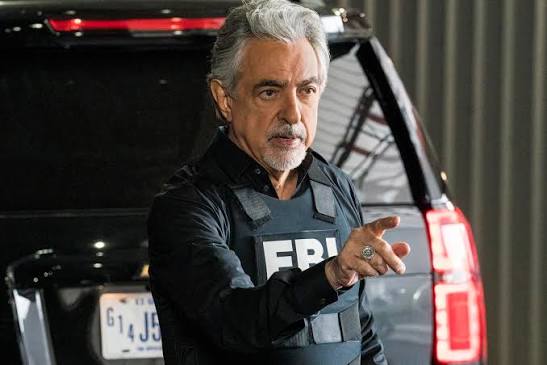
The veteran actor had joined Criminal Minds in Season 3 and spent 13 years portraying Rossi, transforming the experienced profiler into one of the show’s defining characters. In a CBS interview surrounding that final season, Mantegna reflected on a television job that had become a major part of his life.
What nobody fully knew then was that Criminal Minds would eventually find another life.
Looking back now makes Mantegna’s comments feel less like a permanent farewell and more like the closing of one extraordinary chapter.
David Rossi Changed the BAU
Rossi arrived at a critical point in Criminal Minds history.
The departure of Jason Gideon left a significant space within the BAU, and introducing another veteran profiler could easily have felt like an attempt to reproduce what audiences had already lost.
Instead, Rossi became something entirely different.
He brought confidence, experience and occasionally an old-school attitude toward behavioral analysis. As one of the figures associated with the BAU’s earlier history, Rossi could look at the unit from the perspective of someone who remembered what profiling had been before it evolved into the sophisticated operation audiences knew.
But the character gradually became more than the senior expert.
Rossi became family.
His relationships with Prentiss, JJ, Garcia, Reid and the other agents softened the edges of a character who initially appeared more independent.
By Season 15, imagining the BAU without Rossi had become difficult.
Mantegna Developed a Genuine Respect for the FBI
Mantegna’s connection to the role also extended beyond television storytelling.
While reflecting on his years playing Rossi, the actor spoke about the privilege he felt portraying a member of an organization he respected and about spending time at Quantico during his years connected to the series.
That commitment helped explain Rossi’s longevity.
Mantegna did not approach him simply as a fictional investigator who needed to deliver exposition about a case. He built a personality around the profiler.
Food, music, friendship and family became important pieces of Rossi’s identity.
Those details mattered because Criminal Minds was always strongest when viewers could see who these people were after the profile was finished.
Rossi could study complicated behavior during an investigation and then invite his colleagues to his home.
The contrast humanized him.
Season 15 Put Rossi’s Past Back in Front of Him
The final CBS season also gave Rossi unfinished business.
Everett Lynch, known as the Chameleon, had become a deeply personal problem for him. Instead of beginning Season 15 with Rossi emotionally detached from what had happened before, the series allowed that unresolved pursuit to continue affecting him.
It was a fitting conflict for the character.
Rossi had spent his career teaching others that behavior leaves patterns.
Yet his determination to understand Lynch also demonstrated that profilers are not immune to becoming emotionally invested in the people they pursue.
The case challenged Rossi’s objectivity and reminded the rest of the BAU that even its most experienced member could need support.
That reversal became increasingly important to the character.
Rossi was accustomed to helping everyone else.
Season 15 allowed the team to help Rossi.
The BAU Had Become a Family Behind the Scenes Too
One of the most revealing elements of Mantegna’s reflections concerned the people around him.
He did not identify one cast member he expected to miss above everyone else. Instead, he emphasized the larger group and the years they had spent working together.
That sentiment closely mirrored the series itself.
Criminal Minds survived numerous cast changes because the BAU was always bigger than a single relationship.
Prentiss could leave and return.
Different agents could join.
Leadership could change.
Yet the idea of the team as a chosen family remained.
Mantegna’s Rossi became central to that dynamic.
He could serve as mentor, colleague, friend or father figure depending on what another character needed.
The chemistry between the actors made those relationships feel accumulated rather than manufactured.
Rossi and Prentiss Became the Team’s Veteran Foundation
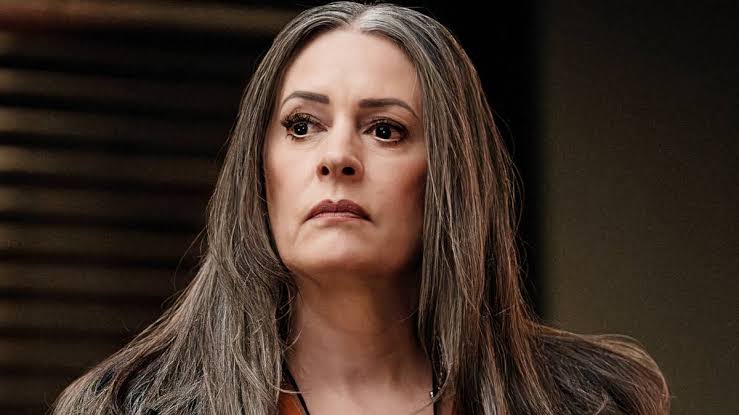
By the final CBS era, Rossi’s relationship with Emily Prentiss had become particularly important.
Paget Brewster’s character carried the responsibility of leadership, while Rossi possessed decades of experience.
Those positions could have created constant competition.
Instead, the characters generally demonstrated a mature understanding of their different responsibilities.
Rossi could advise without needing to control the room.
Prentiss could respect his experience without surrendering her authority.
That balance gave the BAU stability.
When an investigation became uncertain, Prentiss could rely on Rossi to challenge an assumption or recognize something from an earlier era of profiling.
When Rossi became too personally invested, Prentiss could return the favor.
Their trust became one of the quiet strengths of the later seasons.
JJ and Garcia Showed Rossi’s Softer Side
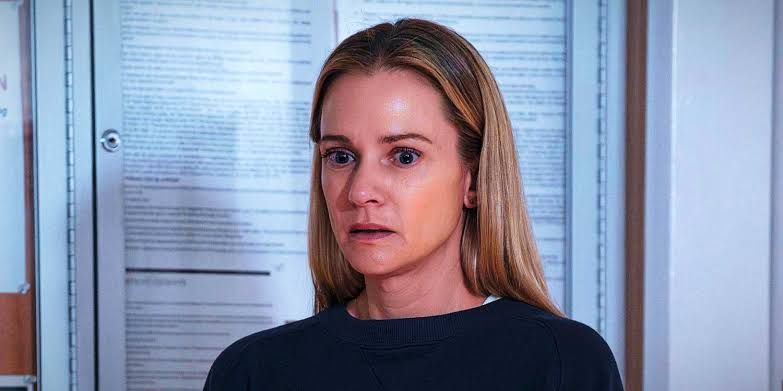
Jennifer “JJ” Jareau and Penelope Garcia also revealed dimensions of Rossi that his professional confidence sometimes concealed.
With JJ, Rossi developed the respect of one veteran profiler for another.
A.J. Cook’s character had grown enormously since her earliest days with the BAU, and Rossi witnessed much of that transformation.
Garcia brought out something different.
Kirsten Vangsness’ technical analyst is expressive where Rossi is often restrained. Their contrasting personalities created humor, but underneath it was genuine affection.
Garcia never needed Rossi to become as emotionally demonstrative as she was.
Rossi never needed Garcia to become less herself.
That acceptance helped define the BAU.
These characters did not become family because they were similar.
They became family because their differences worked together.

The “Final Season” Was Built Around Goodbyes
Season 15 carried an unusual emotional atmosphere because everyone involved believed the finish line was approaching.
Even ordinary BAU traditions suddenly had additional meaning.
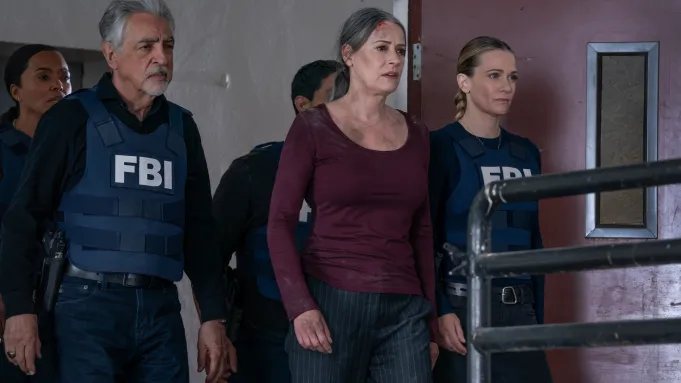
Conversations around the round table, moments aboard the jet and familiar exchanges between longtime characters could potentially be happening for the final time.
The season therefore had to do two jobs simultaneously.
It needed to deliver compelling Criminal Minds stories while also acknowledging the history surrounding them.
For Rossi, that meant confronting unfinished business while considering what his life might look like beyond the BAU.
For the audience, it meant preparing to say goodbye to a character who had been present for most of the show’s run.
Mantegna Even Left the Door Open for a Revival
In retrospect, one of Mantegna’s most interesting comments from the period concerned television revivals.
The actor suggested that revivals could work when they were done well and capable of standing on their own, even entertaining the possibility that Criminal Minds might someday receive that treatment.
At the time, it sounded like an optimistic hypothetical.
It eventually became remarkably prescient.
Criminal Minds returned as Criminal Minds: Evolution, bringing Mantegna back as Rossi alongside familiar faces including Paget Brewster, A.J. Cook, Kirsten Vangsness, Aisha Tyler and Adam Rodriguez.
Suddenly, Season 15 was no longer the absolute ending.
It was the end of one era.
Evolution Proved Rossi Still Had More Story Left
Rossi’s return demonstrated why Mantegna’s character had survived so successfully.
There were still places for him to go.
An older Rossi could no longer be portrayed simply as the endlessly confident veteran who had already seen everything.
Evolution could explore the accumulated emotional cost of his career.
It could make him vulnerable.
It could challenge the assumption that decades of experience automatically provide emotional protection.
Most importantly, it could allow Rossi to need his BAU family.
That was a natural progression for a character who had spent years supporting everyone around him.
Joe Mantegna’s Goodbye Became Something Else Entirely
Watching Joe Mantegna discuss the “final” season of Criminal Minds now carries an unexpected sense of dramatic irony.
He genuinely was saying goodbye to something.
Just not forever.
The original CBS run was ending. A particular era of the BAU was closing, and nobody could guarantee these actors would stand together in the same familiar world again.
That uncertainty made the farewell real.
But Criminal Minds ultimately proved surprisingly difficult to leave behind.
Perhaps that should not have been surprising.
For Mantegna, Rossi was more than another television role. He represented years of daily work, close relationships and a character into whom the actor had incorporated pieces of his own personality.
And for viewers, Rossi had become something equally significant.
He was part of the BAU family.
Season 15 once appeared to mark the end of that family’s story.
Instead, it demonstrated something Criminal Minds would later make official: sometimes closing the file does not mean the story is over.