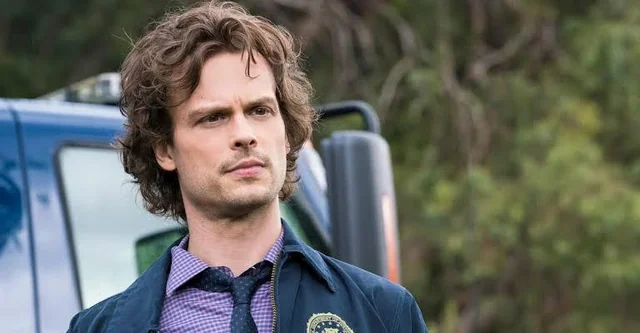
For almost every member of the Behavioral Analysis Unit, experience is the foundation of the job. For Dr. Spencer Reid, knowledge was always something more.
From the earliest seasons of Criminal Minds, Matthew Gray Gubler’s Reid stood apart from the rest of the BAU. He could process extraordinary amounts of information, remember details others had forgotten and connect apparently unrelated facts with astonishing speed. Statistics, psychology, history, literature, geography and behavioral science could all become pieces of the same puzzle inside Reid’s mind.
But intelligence alone never explained why audiences became so attached to him.
Reid’s real appeal came from the contradiction at the center of the character. He could understand extraordinarily complicated concepts while struggling with ordinary social interactions. He could explain human behavior academically while remaining emotionally vulnerable to the people around him.
Over the years, that combination transformed Reid from the BAU’s youngest genius into one of the emotional foundations of Criminal Minds.

Reid Was Never Just the Genius in the Room
When Criminal Minds began, Reid’s intelligence was one of the easiest characteristics to recognize.
He was young, academically accomplished and capable of recalling an almost unbelievable amount of information.
The BAU quickly learned how valuable that ability could be.
A detail that appeared meaningless might remind Reid of an obscure historical event. A geographical pattern could trigger a connection to something he had previously read. A phrase could lead him toward literature, psychology or statistics.
His colleagues occasionally had to remind him to simplify his explanations.
That became part of the character’s humor.
Yet Criminal Minds gradually understood that Reid would become much more interesting if intelligence did not solve everything.
The smartest person in the room could still be uncertain.
And Reid often was.
Gideon Saw Reid’s Potential Early
Jason Gideon played an especially important role in Reid’s early development.
Mandy Patinkin’s veteran profiler recognized that Reid possessed extraordinary intellectual ability but still needed experience understanding how theoretical knowledge translated into real people.
Their relationship therefore carried elements of mentorship.
Gideon did not need Reid to become less intelligent.
He needed him to learn when knowledge mattered — and when something more human was required.
That distinction became fundamental to Reid’s evolution.
Behavioral analysis is not simply about memorizing psychological theories. The BAU deals with people whose choices can be contradictory, emotional and unpredictable.
Reid had to learn that understanding the textbook definition of behavior did not necessarily mean understanding the person standing in front of him.
That lesson would follow him throughout the series.
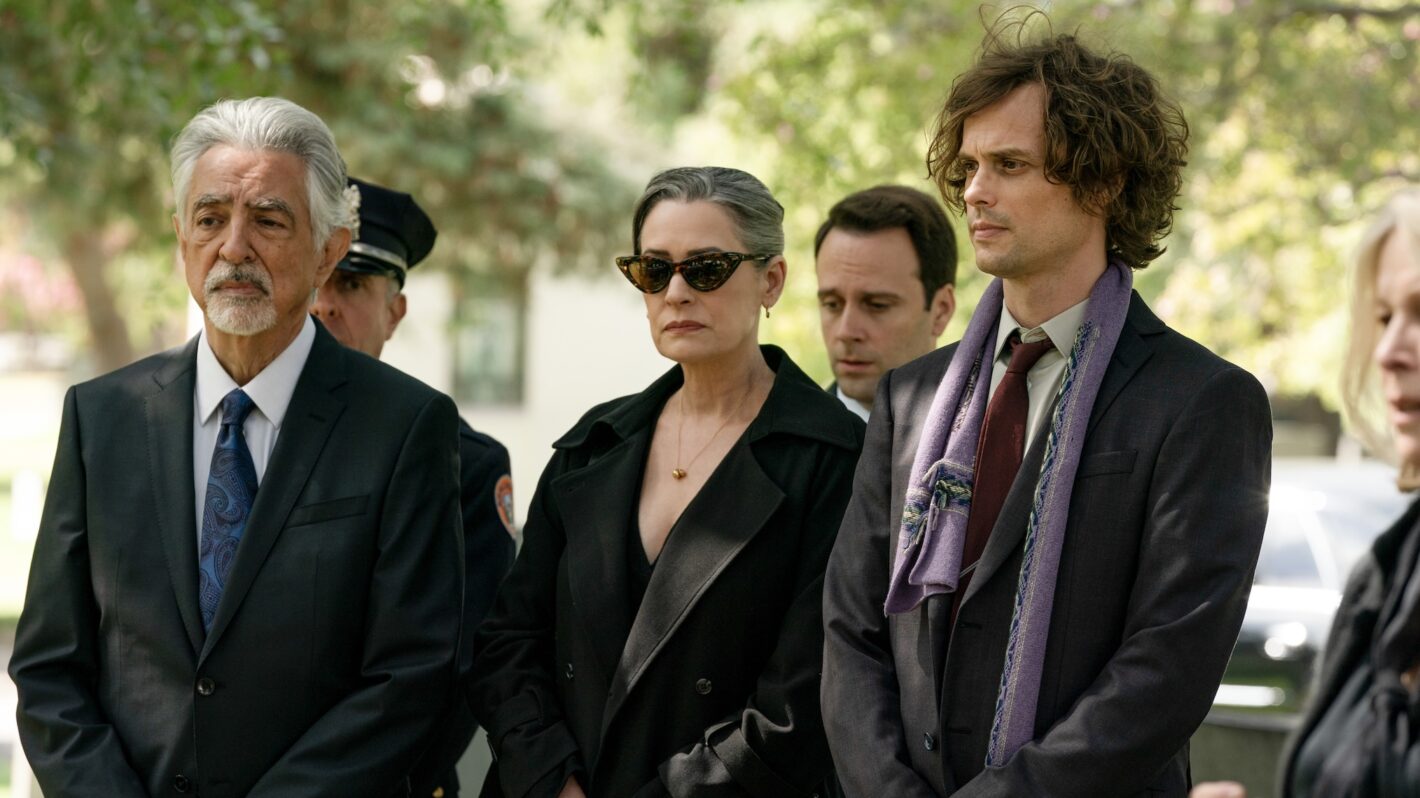
Morgan Became the Brother Reid Never Expected
Derek Morgan brought out another side of Reid.
Shemar Moore’s character could hardly have been more different from the young doctor.
Morgan was confident, physically assured and socially comfortable. Reid could be awkward, overly analytical and uncertain about how other people perceived him.
Instead of allowing those differences to separate them, Criminal Minds turned them into one of its most beloved friendships.
Morgan teased Reid.
Reid occasionally responded with intellectual precision.
But underneath the humor was genuine affection.
Morgan became protective of Reid without treating him as incapable.
That difference mattered.
Reid did not need someone constantly rescuing him.
He needed someone who understood that extraordinary intelligence and emotional sensitivity could exist in the same person.
Their friendship became proof that the BAU could provide Reid with something no academic achievement ever had: a chosen family.
JJ Became One of Reid’s Most Important Connections
Jennifer “JJ” Jareau also became central to Reid’s emotional world.
Their relationship changed enormously over the years.
Early Reid could appear nervous around JJ, while later seasons developed their connection into something built on deep trust and shared history.
A.J. Cook and Matthew Gray Gubler gave the characters an easy familiarity that could only come from years spent working beside one another.
JJ understood Reid’s intelligence without being intimidated by it.
More importantly, she understood Spencer.
There is a difference.
The BAU valued Dr. Reid because of what his mind could contribute.
JJ cared about the person who existed beyond those abilities.
That made their friendship one of the relationships capable of reaching Reid when logic alone could not help him.

Garcia Gave Reid a Place Where Being Different Was Normal
Penelope Garcia offered another important connection.
If Reid was intellectually unconventional, Kirsten Vangsness’ Garcia was unapologetically unconventional in almost every other way.
That made their interactions particularly warm.
Neither needed the other to fit a traditional idea of what a federal agent should look or behave like.
Garcia could embrace Reid’s eccentricities because she understood what it meant to remain individual inside a highly structured environment.
Both characters also represented different kinds of intelligence.
Reid could process theoretical information at remarkable speed.
Garcia could navigate complex digital information and discover connections hidden inside enormous amounts of data.
Together, they demonstrated that the BAU’s greatest advantage was never one particular type of brilliance.
It was the combination of different minds.
Rossi Helped Reid Turn Knowledge Into Wisdom
David Rossi entered Reid’s life at a different stage.
Joe Mantegna’s veteran profiler had something Reid could not acquire through reading: decades of practical experience.
That created an interesting contrast.
Reid could potentially know more facts about a subject.
Rossi could understand how those facts behaved in the real world.
As Reid matured, the distance between those perspectives gradually narrowed.
He accumulated his own experience.
He became more confident.
He learned that being correct and being helpful were not always exactly the same thing.
Rossi, meanwhile, came to respect Reid not simply as the brilliant young member of the team but as an accomplished profiler in his own right.
Knowledge had begun turning into wisdom.
Reid’s Greatest Challenges Could Not Be Solved With Facts
Some of Reid’s most memorable storylines worked precisely because his intelligence could not provide an easy solution.
Personal loss could not be reduced to statistics.
Complicated family relationships could not be solved through mathematics.
Fear did not disappear because Reid understood the neurological processes behind it.
That vulnerability kept the character grounded.
The audience could admire his mind while recognizing his emotional struggles.
In fact, those struggles often made Reid’s intelligence feel more meaningful.
Knowledge became a coping mechanism, a source of confidence and sometimes a shield.
But the series repeatedly forced him to lower that shield.
Reid had to rely on other people.
For someone capable of finding so many answers alone, learning to accept help became one of his most important forms of growth.
Prentiss Learned to Trust Reid’s Instincts
Emily Prentiss also witnessed Reid evolve from gifted young profiler to experienced colleague.
Their relationship reflected the broader transformation of the BAU.
Paget Brewster’s Prentiss understood that Reid sometimes arrived at conclusions through connections other people could not immediately see.
As Reid accumulated experience, those observations carried increasing authority.
Eventually, he was no longer the youngest person at the table trying to prove why his theory mattered.
He had become someone whose colleagues knew they should listen to.
That change happened gradually, which made it believable.
The BAU watched Reid grow.
So did the audience.
His Absence Changed the Chemistry of Evolution
When Criminal Minds returned in its Evolution form without Reid as part of the regular ensemble, his absence inevitably changed the team’s chemistry.
Garcia remained the technological powerhouse.
Rossi provided experience.
Prentiss led the unit.
JJ, Tara and Alvez contributed their own expertise.
The BAU continued functioning because it had always been an ensemble.
But Reid had occupied a very specific place within that ensemble.
Nobody else processed information exactly like him.
More importantly, nobody else carried precisely the same relationships with the veteran characters.
Reid connected multiple eras of the BAU.
His history stretched back to Gideon and Hotchner, through Morgan’s years on the team and into the later Prentiss-led era.
That made him more than a familiar face.
He was part of the franchise’s institutional memory.
Spencer Reid Became More Than the Foundation of Knowledge
Calling Spencer Reid the BAU’s “foundation of knowledge” captures only part of what made him special.
Yes, Reid could deliver the statistic nobody else knew.
He could recognize the obscure reference.
He could turn apparently disconnected clues into a theory that changed an investigation.
But after years of Criminal Minds, audiences were no longer watching simply to discover what Reid knew.
They cared about how he felt.
They watched him develop friendships, experience loss, confront uncertainty and gradually become more comfortable with the person he was.
The genius grew up.
And importantly, he never needed to stop being Reid in order to do it.
That may be Matthew Gray Gubler’s greatest contribution to the character.
Spencer Reid could be brilliant without being emotionally invulnerable. He could be socially awkward without being reduced to a joke. He could carry extraordinary knowledge while still needing the people around him.
The BAU gave Reid somewhere his unusual mind could become an extraordinary strength.
In return, Reid gave the BAU something equally valuable.
He reminded them that understanding human behavior requires more than facts.
It requires curiosity.
It requires compassion.
And sometimes, even for the person who seems to know almost everything, it requires being willing to admit that the answer cannot be found in a book.
That is why Dr. Spencer Reid became more than the BAU’s foundation of knowledge.
He became part of its heart.