For nearly two decades, Criminal Minds has been associated with intense investigations, complicated psychological profiles and a Behavioral Analysis Unit that rarely gets much time to relax.
Behind the cameras, however, the atmosphere could look remarkably different.
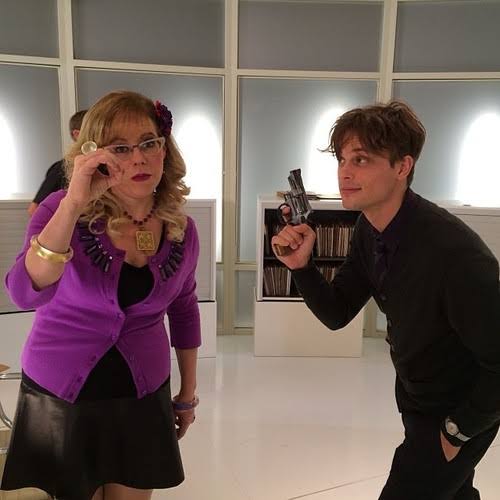
Take away the dramatic music, carefully constructed suspense and serious expressions around the BAU conference table, and the cast behind some of television’s most recognizable profilers could be playful, unpredictable and very funny. Bloopers and lighthearted behind-the-scenes moments have long offered fans a welcome contrast to the finished episodes, revealing how actors could move from an emotionally demanding scene to laughter once something went unexpectedly wrong.
That contrast is part of what makes the lighter side of Criminal Minds so entertaining.
Joe Mantegna, Paget Brewster, A.J. Cook, Kirsten Vangsness, Matthew Gray Gubler, Shemar Moore and other members of the show’s extended ensemble helped create characters audiences took seriously. But when the cameras stopped rolling as planned, those familiar BAU personalities could disappear almost instantly.
What remained was a cast whose chemistry extended far beyond the scripted dialogue.
Bloopers Reveal the People Behind the Profilers
A polished episode of Criminal Minds depends heavily on control.
Dialogue has to arrive at the right moment. Technical terminology needs to sound convincing. Actors must move through complicated scenes while maintaining the emotional tone of the investigation.
A blooper destroys that illusion in seconds.
A missed line, an unexpected reaction or a moment when an actor simply cannot maintain a serious expression can completely change the atmosphere.
That is why bloopers are particularly effective for a series like Criminal Minds.
The greater the contrast between the fictional world and the actors making it, the funnier the mistake can become.
Suddenly, viewers are no longer watching elite FBI profilers.
They are watching coworkers trying to finish a scene without making one another laugh.
Matthew Gray Gubler Brought an Unpredictable Energy
Few performers seem more naturally suited to the playful side of the Criminal Minds set than Matthew Gray Gubler.
As Dr. Spencer Reid, Gubler spent years delivering complicated dialogue filled with statistics, psychological concepts and obscure pieces of information.
Reid could explain something extraordinarily complex while the rest of the BAU attempted to keep up.
That seriousness created an amusing contrast with Gubler’s much more eccentric off-camera public persona.
Behind the scenes, the distinction between the highly analytical Reid and the actor portraying him helped make lighter moments especially memorable for fans.
One moment, audiences could be watching Reid intensely working through a difficult intellectual problem.
The next, the illusion of the genius profiler could disappear as the cast relaxed between takes.
It is a reminder of how much performance goes into making Reid feel so precise.
Kirsten Vangsness Made Garcia’s Personality Feel Effortless
Penelope Garcia already brings humor into the fictional world of Criminal Minds, which gives Kirsten Vangsness a slightly different challenge.
Garcia is colorful, expressive and emotionally open.
She can brighten the BAU’s atmosphere without undermining the seriousness of what her colleagues are doing.
That balance is difficult.
Vangsness makes it look natural.
Behind the scenes, her chemistry with the ensemble also helps explain why Garcia’s relationships feel so convincing on screen.
Whether Garcia is trading affectionate remarks with Derek Morgan, disagreeing with Luke Alvez or interacting with Rossi and JJ, the character seems genuinely connected to the people around her.
Lighthearted production moments can reveal where some of that comfort originates.
The cast had years to learn one another’s rhythms.
That familiarity cannot easily be manufactured.
Shemar Moore and Garcia Created a Fan-Favorite Dynamic
One of the original series’ most entertaining relationships belonged to Garcia and Derek Morgan.
Shemar Moore and Vangsness developed a playful rhythm that became instantly recognizable.
Morgan could tease Garcia.
Garcia could respond with complete confidence.
Yet beneath the jokes was genuine trust.
That chemistry became such a familiar part of Criminal Minds that their lighter interactions often offered audiences relief from otherwise serious episodes.
Behind-the-scenes material makes the dynamic even more interesting because it highlights the performers responsible for creating it.
Successful television chemistry is rarely just about dialogue.
Timing matters.
Trust matters.
Knowing exactly how far to push a joke matters.
Moore and Vangsness made Morgan and Garcia’s friendship feel spontaneous because their performances carried that sense of ease.
Joe Mantegna Could Shift Between Rossi and Himself
David Rossi is one of the BAU’s most experienced figures.
Joe Mantegna plays him with the confidence of someone who has spent decades understanding human behavior.
Rossi can walk into a room and immediately feel like the veteran.
That makes moments when the seriousness breaks particularly entertaining.
The appeal is contrast.
Viewers are accustomed to seeing Rossi deliver measured observations, challenge assumptions and guide younger colleagues.
When the professional atmosphere disappears between takes, audiences get to see the performer behind that carefully controlled character.
Mantegna’s long tenure also gave him deep familiarity with the ensemble.
That history contributed to Rossi’s believable relationships with Prentiss, JJ, Garcia and Reid.
The actors did not have to manufacture years of shared experience.
Eventually, they actually had it.
Paget Brewster’s Prentiss Has One of the Biggest Contrasts
Emily Prentiss often has to be one of the most composed people in the room.
Especially after becoming a leader within the BAU, Prentiss carries enormous responsibility.
Paget Brewster therefore spends a great deal of screen time maintaining authority while everything around her becomes increasingly complicated.
The behind-the-scenes contrast can be delightful.
Seeing the tension of a scene disappear once a take goes wrong reminds viewers how quickly actors must move between emotional states.
Brewster can be Prentiss — focused, controlled and responsible for the team — and then return to the much lighter atmosphere of colleagues making television together.
That ability speaks to the professionalism required by the series.
The darker the fictional circumstances become, the more important it may be for performers to leave some of that tension inside the scene.
A.J. Cook’s JJ Grew Up Alongside the Cast
A.J. Cook’s Jennifer Jareau experienced enormous changes throughout the series.
JJ began in a different professional role before eventually becoming one of the BAU’s most experienced profilers.
Cook therefore spent years evolving alongside the series itself.
Behind-the-scenes moments offer another way of understanding that longevity.
Many cast members were not simply showing up to play characters who supposedly knew one another well.
They had actually spent years working together.
That history is visible in JJ’s relationships with Reid, Garcia, Prentiss and Rossi.
A small reaction between two characters can feel meaningful because the actors understand the relationship without needing every emotion explained through dialogue.
Bloopers expose the other side of that familiarity.
Sometimes knowing your scene partner extremely well makes staying serious even harder.
The Roundtable Could Become a Surprisingly Difficult Place
The BAU roundtable is one of Criminal Minds’ most familiar locations.
It is where the team receives information, studies new cases and begins building a profile.
In the finished episodes, those scenes often look effortless.
In reality, ensemble sequences can require tremendous precision.
Multiple actors have dialogue.
Information must be delivered clearly.
Reactions need to match.
Nobody can interrupt accidentally or lose track of the scene’s rhythm.
That creates plenty of opportunities for something to go wrong.
And once one performer breaks character, laughter can become contagious.
The finished product gives viewers a highly coordinated team.
The lighter material reminds them how much work went into creating that impression.
The Famous Jet Had a Lighter Side Too
The BAU jet became almost as recognizable as some of the characters.
On screen, it provides a place for the profilers to discuss theories, review evidence and occasionally reveal something personal.
It is also an important setting for the BAU family dynamic.
Away from the fictional investigation, however, the familiar set represents something else: years of actors sitting together, rehearsing dialogue and waiting for another take.
That distinction makes behind-the-scenes glimpses fascinating.
A location associated with serious conversations can instantly become an ordinary television set filled with colleagues.
The magic of production is seeing it become the BAU jet again when the cameras roll.
Humor Helped Support the Show’s Emotional Balance
The lighter side of Criminal Minds serves another purpose.
A series built around emotionally demanding material needs contrast.
That is true for audiences, but it can also matter for the people making the show.
Humor provides distance between fiction and reality.
A missed line or unexpected laugh does not weaken the finished drama.
If anything, it demonstrates how completely the performers transform when a scene begins.
That may explain why fans continue enjoying bloopers years after individual episodes first aired.
They provide access to a version of Criminal Minds viewers normally never see.
Behind the BAU Was Another Kind of Family
Ultimately, the funniest Criminal Minds behind-the-scenes moments reveal something surprisingly meaningful about the franchise.
The BAU’s chosen-family dynamic did not exist only because scripts said these characters cared about one another.
Years of collaboration helped give those relationships texture.
The actors learned one another’s timing.
They shared long production days.
They watched characters arrive, depart and sometimes return.
That familiarity eventually became part of what audiences saw on screen.
It is why Rossi and Prentiss can communicate so much with a look.
It is why JJ and Garcia feel like longtime friends.
It is why Morgan and Reid could feel like brothers despite being completely different personalities.
And it is why the BAU can still feel like a family even as the franchise evolves.
Criminal Minds may be remembered for psychological suspense and unforgettable character drama, but its bloopers reveal the wonderfully human machinery underneath it all.
Sometimes a line goes wrong.
Sometimes someone laughs.
Sometimes the entire illusion collapses.
Then everyone resets, the cameras roll again, and the BAU returns.
Perhaps that is the most entertaining profile of all: behind one of television’s most serious teams was a cast capable of having a very good time making it believable.