For five intense seasons of Taylor Sheridan’s juggernaut neo-Western series Yellowstone and its expanding television universe, the primary narrative engine driving the Dutton family has been singular, high-stakes, and relentless: the war for the land.
Week after week, millions of viewers tune in to watch John Dutton (Kevin Costner), his daughter Beth (Kelly Reilly), and enforcer Rip Wheeler (Cole Hauser) wage scorched-earth battles against private equity firms, casino moguls, federal agents, and environmental activists. The ranch itself—a massive, picture-perfect empire of high-country wilderness—is routinely framed as the ultimate prize worth lying, stealing, and killing to protect.
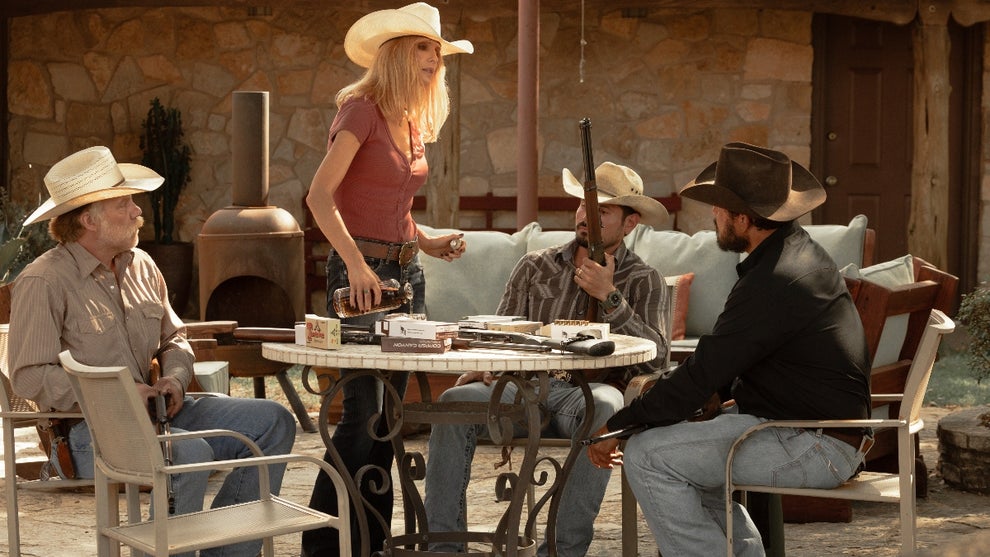
However, beneath the high-octane corporate lawsuits, the armed standoffs on sandstone mesas, and the bodies left at the “Train Station,” attentive viewers and television critics have begun to notice a far more fascinating truth.
The most gripping, psychologically complex conflict on the Dutton Ranch has almost nothing to do with property deeds, cattle prices, or corporate acquisitions.
The true war tearing the Dutton empire apart from the inside out is an invisible, generational battle over trauma, identity, and the toxic price of absolute loyalty—a war where the real enemy isn’t Wall Street, but the family legacy itself.
The Illusion of the Land as a Noble Cause
On the surface, the Dutton family’s fight to retain their ancestral territory is framed with traditional Western romance. They position themselves as noble defenders of a vanishing frontier lifestyle, standing firm against the creeping corruption of modern suburban sprawl and corporate greed.
Yet, as the franchise digs deeper into its character studies, that romantic veil rapidly disintegrates.
The obsession with protecting the land isn’t driven by environmental stewardship or agricultural necessity. It is driven by the dead. John Dutton’s desperate, unyielding grip on the ranch stems entirely from a deathbed promise made to his father—a psychological trap that converted a piece of real estate into an unholy idol requiring endless blood sacrifices.
By elevating property ownership above human life, the Duttons created a toxic internal ecosystem where love is conditional, individuality is punished, and family members are valued only by how much pain they are willing to endure to keep the fence lines intact. The land isn’t a paradise; it is a gilded open-air prison.
Beth vs. Jamie: The Battlefield of Unprocessed Grief
Nowhere is this non-territorial war more brutally displayed than in the terrifying, deeply personal feud between Beth Dutton and her brother Jamie (Wes Bentley).

To casual observers, their hatred looks like a political or legal power struggle over who will control the family business. In reality, their war is a tragic study in unresolved childhood trauma and institutional cruelty:
- The Irreparable Rupture: The foundational rift between them wasn’t caused by a land deal, but by a horrific teenage decision—Jamie taking a pregnant, young Beth to a clinic where she was sterilized without her informed consent.
- The Weaponization of Guilt: Beth’s lifelong campaign to psychologically destroy Jamie isn’t about protecting the cattle operation; it is an explosion of rage against the brother who took away her future, and a father who cultivated an environment where such desperation flourished.
- The Search for Identity: Jamie’s endless, tragic cycle of betraying and crawling back to his family stems from an overwhelming desire to be loved by a father who fundamentally views him as a tool rather than a son.
When Beth and Jamie trade venomous insults across the dining room table, the multi-million-dollar land battle completely evaporates. What remains is a raw, terrifying play about two broken children destroying each other because their family culture never permitted them to heal.
The Internal War for Kayce’s Soul
While Beth and Jamie engage in active warfare, the quietest—and perhaps most heartbreaking—conflict on the ranch takes place inside Kayce Dutton (Luke Grimes).
Kayce’s narrative journey is defined by a brutal choice between two fundamentally incompatible identities:
- The Dutiful Son: The battle-scarred Navy SEAL and branded cowboy bound by blood and tactical duty to fight his father’s battles.
- The Independent Man: The loving husband and father desperate to protect his wife, Monica (Kelsey Asbille), and son, Tate (Brecken Merrill), from the dark, soul-crushing curse of the Dutton name.
Kayce’s arc proves that the greatest threat facing the Dutton Ranch isn’t an outside developer’s bulldozer; it is the realization that to be a “good Dutton,” one must sacrifice being a good human being. His internal struggle to break the cycle of generational abuse before it destroys his own child provides the show with its most authentic emotional weight.
The Brand: The Psychological Toll of Total Loyalty
Even down in the bunkhouse, where the show’s working-class heart resides, the central conflict transcends agricultural labor.
The literal branding of ranch hands like Rip Wheeler, Jimmy Hurdstrom, and Lloyd Pierce with a red-hot “Y” iron is marketed as the ultimate badge of honor and second-chance brotherhood. But beneath the cowboy romanticism lies a dark, feudal dynamic. The brand is a mark of permanent ownership—a psychological contract that trades a man’s legal freedom and moral compass for food, shelter, and a sense of belonging.
Rip Wheeler’s heartbreaking devotion to John Dutton isn’t built on land ownership; it is built on the desperate gratitude of a traumatized orphan who was given a purpose. Watching Rip enforce horrific commands without hesitation highlights the terrifying efficiency of a patriarch who knows how to weaponize broken people for his own ends.
The Legacy That Consumes Its Creators
Great television sagas endure long after the plot twists end because they touch on universal human truths.
While the flashy gunfights, corporate intrigue, and breathtaking Montana landscapes sell the show to a global audience, the true soul of the Yellowstone universe lies in its terrifying exploration of family dynamics.
The most interesting conflict on the Dutton Ranch was never about who gets to own the dirt in Paradise Valley. It has always been about the psychological price of wearing the brand, the weight of carrying dead men’s promises, and the tragic realization that in trying to save an empire, the Duttons destroyed the very family meant to inherit it.