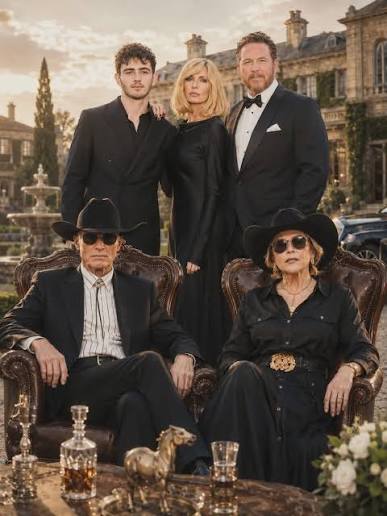
Few modern television ranches have become as recognizable as the Dutton Ranch.
Through Yellowstone, viewers have watched the Dutton family fight over land, cattle, family loyalty, money, development, and the fading traditions of the American West.
The ranch looks enormous. The horses are beautiful. The sunsets seem almost too perfect. Cowboys ride across open country, work cattle, settle disputes, and live by rules that appear to have been passed down for generations.
It is compelling television.
But there is an important distinction that often gets overlooked: the Dutton Ranch is fictional, and it is located in Montana, not Texas.
That doesn’t mean the series has nothing to say about Texas cowboy culture. In fact, Yellowstone gets several important elements of ranch life surprisingly right. It understands the physical demands of working with livestock, the importance of land, the bond between cowboys and horses, and the complicated relationship ranching families have with changing America.
At the same time, the show turns reality up to eleven. Violence, political intrigue, family warfare, million-dollar land deals, and dramatic confrontations dominate the story because they make great television.
Real Texas ranch life is usually much less cinematic—and, in some ways, much harder.
So what does Dutton Ranch get right about the cowboy lifestyle? And where does the Hollywood version fall off the horse?
The Dutton Ranch Is Montana, Not Texas
Before comparing the series with Texas cowboy culture, one fact needs to be established.
The Dutton Ranch is fictional, and its setting is Montana. The landscape, weather, ranching traditions, and culture represented in Yellowstone are therefore not a direct portrait of Texas.
That matters because the American West isn’t one giant cultural block.
A rancher in West Texas may deal with extreme heat, drought, mesquite, water scarcity, and vast stretches of dry terrain. A Montana rancher faces dramatically different winters, snow, temperatures, and grazing conditions.
The cowboy identity may overlap, but the daily experience can be worlds apart.
Still, the Dutton story taps into a broader Western tradition that Texas shares: independence, horsemanship, livestock work, land stewardship, and a deep emotional connection to ranching heritage.
1. Ranching Is More Than a Job
One of the strongest ideas in Yellowstone is that ranching isn’t simply an occupation.
For many ranching families, land represents history.
A ranch may have been passed from grandparents to parents and then to children. It can contain family memories, working traditions, gravesites, stories, and a sense of identity that can’t be measured by a real-estate appraisal.
That’s something the Dutton storyline captures extremely well.
The characters don’t talk about the ranch as though it were merely an investment property. They see it as part of who they are.
That emotional connection is very real.
For Texas ranching families, land can carry the same weight. Selling a piece of property isn’t always viewed as a simple financial transaction. Sometimes it means giving up a piece of family history.
2. The Work Is Physically Demanding
Hollywood occasionally makes ranch work look romantic.
A cowboy rides into the sunset, the horses look magnificent, and everyone seems to have unlimited time to stare dramatically across the landscape.
Reality is considerably less poetic.
Livestock don’t care whether you’re tired.
Cattle need feeding, monitoring, moving, sorting, and medical attention. Fences break. Equipment fails. Weather changes. Roads become difficult. Water systems need attention.
A ranch can demand work before sunrise and after sunset.
Yellowstone does understand this part of the lifestyle. Its cowboys aren’t simply wearing hats for decoration. They are shown handling cattle, riding horses, repairing property, and dealing with the unpredictable nature of ranch work.
That’s one reason the ranch scenes feel more authentic than the show’s larger-than-life drama.
3. Horsemanship Really Matters
A cowboy without a horse isn’t necessarily impossible—but traditional ranch horsemanship remains an important part of Western culture.
The relationship between rider, horse, and cattle requires skill.
A good ranch horse needs to respond to subtle movements and remain composed around livestock. A rider needs balance, timing, judgment, and patience.
The Dutton Ranch puts considerable emphasis on horsemanship, and that resonates with real ranch culture.
In Texas, horses remain deeply connected to ranching traditions, rodeo culture, working cattle, and Western identity.
But there’s a catch.
The Reality Behind the Saddle
Television makes riding look effortless.
Real horsemanship takes years to develop.
It isn’t about looking impressive in a saddle. It is about understanding an animal, reading cattle, controlling movement, staying safe, and making good decisions under pressure.
That’s a lot less glamorous than television suggests—but much more impressive.
4. Weather Can Control Everything
Here’s another element Yellowstone gets right: ranchers don’t control the weather.
They can plan.
They can prepare.
They can adapt.
But they can’t negotiate with a drought, blizzard, flood, heat wave, or sudden storm.
Texas ranchers know this particularly well.
From the Panhandle to South Texas, weather can shape grazing conditions, cattle health, water supplies, forage availability, and operating costs.
A beautiful landscape can become a serious challenge when conditions change.
That vulnerability is central to ranching, and it is one of the most believable parts of the Dutton story.
5. Land Pressure Is Very Real
Perhaps the most realistic conflict in Yellowstone isn’t the family drama.
It’s the battle over land.
As cities expand, property values rise. Developers become interested in large parcels. Roads and infrastructure change rural communities. Younger generations may have different priorities from previous generations.
Texas has experienced enormous growth, particularly around major metropolitan areas.
That creates a difficult question for landowners:
Do you preserve the ranch, sell part of it, or adapt the business to survive?
The Dutton family takes this conflict to an extreme, but the underlying issue is genuine.
For many ranchers, preserving land isn’t simply about refusing change. It’s about figuring out how to remain financially viable while maintaining a working operation.
Where Dutton Ranch Gets Texas Cowboy Life Wrong
6. Real Cowboys Don’t Spend Every Day in a Family War
This might be the biggest difference.
The Dutton family seems to experience enough conflict for several generations of television dramas.
Real ranchers certainly deal with disagreements. Families argue. Business partners fall out. Property disputes happen.
But most working cowboys aren’t waking up every morning expecting an elaborate conspiracy before breakfast.
Ranch life involves a lot more routine than television shows.
There are long stretches of ordinary work.
Feed the animals.
Check the fences.
Move cattle.
Maintain equipment.
Monitor water.
Handle paperwork.
Repeat.
It’s demanding, but it usually isn’t a nonstop action movie.
7. The Cowboy Lifestyle Isn’t All About Guns
Western television often associates cowboy identity with firearms.
That connection has historical roots, but it can become exaggerated.
The modern Texas rancher is just as likely to worry about cattle prices, insurance, veterinary bills, fuel costs, equipment maintenance, drought conditions, property taxes, and market conditions as anything involving a gunfight.
The real tools of ranching are often much less dramatic.
A pickup truck.
A tractor.
A fence tool.
A stock trailer.
A phone.
A computer.
A pair of well-used boots.
And, of course, a horse when the job calls for one.
The reality is more practical than cinematic.
8. Not Every Cowboy Lives Like a Dutton
The Dutton family represents an enormous, wealthy ranching operation.
That isn’t representative of every Texas rancher.
Texas ranches vary enormously in size, ownership structure, income, geography, livestock operations, and business models.
Some families operate large properties. Others manage smaller ranches. Some combine ranching with other sources of income.
Modern ranching can also involve sophisticated technology.
GPS systems, drones, digital records, livestock monitoring, improved breeding techniques, online marketplaces, and modern equipment can all play a role.
The image of a cowboy completely disconnected from modern technology is more myth than reality.
Modern Technology Meets Old-School Tradition
This is one of the most interesting contradictions in today’s ranching world.
A rancher can spend the morning on horseback and the afternoon working with technology.
Tradition and innovation don’t necessarily fight each other.
Sometimes they work together.
A rancher may use modern tools precisely because they make it easier to preserve the land and continue a family business.
9. Texas Cowboy Culture Is More Diverse Than Television Suggests
Another weakness of the Dutton-style cowboy image is that it presents a relatively narrow vision of Western culture.
Texas cowboy history is much broader.
The state’s ranching traditions have been shaped by generations of people from different backgrounds. Hispanic vaqueros played an enormous role in developing the skills, equipment, terminology, and traditions that became associated with American cowboy culture.
The cowboy didn’t simply appear out of nowhere.
The American cowboy tradition grew from a mixture of cultures and histories.
Any serious discussion of Texas cowboy life needs to recognize that complexity.
10. Real Ranchers Have Business Problems, Too
One thing television rarely makes exciting is accounting.
Unfortunately, accounting is real.
Ranching is a business, and businesses have expenses.
Feed costs money. Fuel costs money. Veterinary care costs money. Equipment costs money. Property requires maintenance. Employees need to be paid.
Then there are unpredictable challenges.
A drought can change the economics of an operation. Cattle markets can fluctuate. Interest rates can affect financing. Land taxes and development pressures can complicate long-term planning.
The Duttons certainly worry about money, but the show often transforms financial problems into dramatic confrontations.
In reality, the battle may happen around a spreadsheet rather than a campfire.
11. The Cowboy Code Is More Complicated Than TV Suggests
Yellowstone frequently portrays a strong cowboy code built around loyalty, honor, family, and tradition.
There is truth in that.
Ranch communities can place enormous value on trust and reputation.
But real people don’t fit neatly into television archetypes.
A rancher can be fiercely independent while embracing modern business practices. Someone can love tradition without rejecting change. A family can disagree without becoming enemies.
Real life has more gray areas.
Television needs heroes, villains, betrayals, and big decisions.
Ranching doesn’t.
12. The Landscape Is Romanticized
The Dutton Ranch looks spectacular.
And that’s intentional.
Huge mountains, sweeping fields, dramatic skies, horses, cattle, wooden fences, and golden sunsets create an almost mythical version of the West.
Texas certainly has spectacular landscapes, but they don’t all look like Montana.
West Texas can be dry and rugged. The Hill Country has rolling terrain and limestone landscapes. East Texas is greener and more forested. South Texas has its own distinctive brush country.
There isn’t one universal Texas ranch landscape.
The West Is Bigger Than One Postcard
That’s where the show’s imagery can mislead viewers.
The American West isn’t a single visual style.
It is a collection of climates, communities, ecosystems, histories, and ranching traditions.
Texas alone proves that point.
13. Ranch Life Is Often Quiet
Ironically, one of the least dramatic parts of Yellowstone can be one of the most accurate.
The quiet moments.
The long rides.
The early mornings.
The work around livestock.
The conversations between people who have spent years working together.
The feeling of being surrounded by open land.
Those moments communicate something that explosions and confrontations never can.
Cowboy culture has always contained an element of patience.
You watch.
You wait.
You work.
You respond when necessary.
That rhythm doesn’t always make for thrilling television, but it is part of the appeal.
14. What the Dutton Myth Gets Emotionally Right
Even when Yellowstone exaggerates reality, it understands something important.
People don’t always fight for land because of money.
Sometimes they fight because they are afraid of losing a way of life.
That’s a powerful distinction.
A ranch can represent childhood, family, independence, tradition, and belonging.
For someone raised around ranching, losing the property can feel like losing a part of their identity.
The Dutton family’s obsession with protecting the ranch is exaggerated for drama, but the emotional foundation is recognizable.
That may be the show’s greatest connection to real cowboy culture.
15. The Biggest Difference: Reality Doesn’t Need a Villain
In Yellowstone, there is almost always someone threatening the ranch.
Developers.
Politicians.
Business interests.
Family members.
Competitors.
Outside investors.
Real ranchers certainly face external pressures, but sometimes the biggest challenge isn’t a person.
It’s economics.
It’s weather.
It’s changing demographics.
It’s aging infrastructure.
It’s succession planning.
It’s finding enough workers.
It’s keeping a family business profitable.
Those challenges aren’t as easy to put into a television script.
Yet they may be more important to the future of American ranching than any fictional showdown.
16. Why Dutton Ranch Still Feels Authentic
So why do millions of viewers connect with the Dutton Ranch if so much of the story is exaggerated?
Because authenticity isn’t always about factual accuracy.
Sometimes it’s about emotion.
The series understands the feeling of watching an old way of life disappear.
It understands why someone might look across a piece of land and see more than property.
It understands the pride associated with working outdoors, caring for animals, mastering difficult skills, and carrying forward traditions.
Those emotions don’t belong exclusively to Montana.
They can be found throughout Texas and across the American West.
17. Dutton Ranch vs. Real Texas Ranching: The Bottom Line
If you treat Yellowstone as a documentary about Texas cowboys, you’re going to be disappointed.
If you treat it as a dramatic interpretation of the pressures surrounding Western ranch culture, it becomes much more interesting.
The Dutton Ranch gets the heart of cowboy culture surprisingly well.
It understands land.
It understands family.
It understands horses.
It understands livestock.
It understands the pride of working with your hands.
It understands the fear of watching development transform rural communities.
But it gets the daily reality wrong by making ranch life far more violent, glamorous, wealthy, and dramatic than most real people experience.
And that’s okay.
Television needs drama.
Real ranching needs resilience.
Those aren’t the same thing.
Conclusion: The Real Cowboy Story Is Bigger Than Yellowstone
The Dutton Ranch may be fictional, but the questions surrounding it are real.
Who gets to control Western land? How can ranching families preserve their heritage while adapting to modern economics? What happens when development reaches rural communities? And can an old-fashioned cowboy identity survive in a rapidly changing world?
Yellowstone doesn’t answer those questions perfectly. Sometimes it exaggerates them almost beyond recognition.
But perhaps that’s why the show works.
Behind the shootouts, family betrayals, political battles, and dramatic horseback scenes is a much simpler idea: people care deeply about the places they call home.
Real Texas cowboy life may not feature a Dutton-style crisis every afternoon. It may be quieter, messier, more practical, and much more complicated.
Yet that doesn’t make it less fascinating.
If anything, the real story is better because it doesn’t need Hollywood to make it meaningful.
The true cowboy legacy isn’t about looking tough on horseback.
It’s about showing up, doing difficult work, respecting the land, caring for animals, adapting when conditions change, and carrying something valuable into the next generation.
That’s a story worth telling—with or without a television camera.