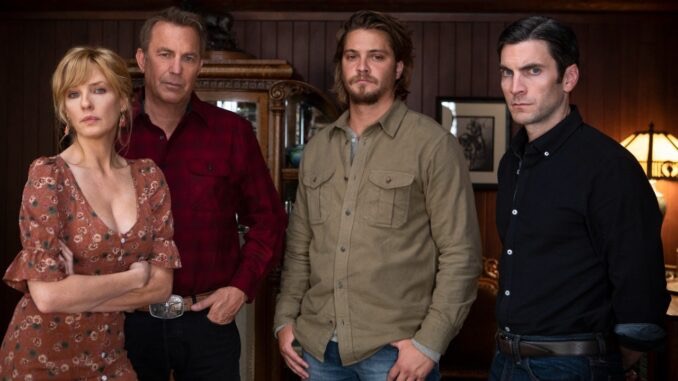
For over five seasons, millions of viewers across the globe felt they had earned a master’s degree in the dark, blood-soaked history of the Dutton family.
Through Taylor Sheridan’s juggernaut neo-Western series Yellowstone and its critically acclaimed prequel chapters, 1883 and 1923, fans watched the Dutton clan fight, murder, and maneuver across centuries to defend their sprawling Montana empire.
We learned to read the family’s brutal moral code as absolute gospel. We accepted that John Dutton (Kevin Costner) was the ultimate protector of a sacred wilderness, that Beth Dutton (Kelly Reilly) was an unstoppable weapon of filial devotion, and that Rip Wheeler (Cole Hauser) represented the ultimate, branded loyalty. Viewers spent years rooting for this antihero dynasty, treating their ruthless defense of the land as a heroic, romantic stand against modern corporate greed.

However, as the broader Taylor Sheridan television universe shifts its focus toward new offshoots, sequels, and expansive franchise chapters centered on the iconic estate—frequently referred to in development circles and fan communities as the upcoming Dutton Ranch era—a startling realization is beginning to take shape.
The long-held assumptions fans built over years of watching the flagship show are about to be thoroughly deconstructed. Everything we thought we knew about the Dutton family’s moral crusade, their historical claims, and their true legacy on the land is about to be turned inside out.
The Myth of the Heroic Protectors
To understand why the future of the franchise threatens to subvert fan expectations, one must first look at the romanticized lens through which viewers originally viewed the family.
In the original series, the Duttons framed their violent actions as a noble preservation of traditional Western heritage. When John Dutton ordered bodies thrown down the ravine at the infamous “Train Station,” or when Beth orchestrated the corporate destruction of rival firms, the audience was encouraged to see it as a necessary evil—a hard family doing hard things to keep pristine Montana land out of the hands of slick real estate developers and casino magnates.
Yet, as the franchise expands its lens to look at the ranch beyond John Dutton’s immediate perspective, that heroic narrative begins to crumble.
The upcoming narrative chapters are leaning heavily into the uncomfortable, historical realities that the flagship show often smoothed over. When viewed without the charismatic, protective presence of John Dutton leading the charge, the family’s actions no longer look like noble conservationism. They look like the ruthless tactics of a feudal cartel using violence, political corruption, and systemic intimidation to maintain a personal monopoly over hundreds of thousands of acres.
Fans who spent years celebrating the Duttons as traditional American folk heroes are going to be forced to confront a far more disturbing reality: the Duttons were never the saviors of the West—they were merely its most successful tyrants.
The Hidden History Written into the Soil
The primary engine behind this narrative recontextualization is the franchise’s deepening commitment to historical and cultural perspective, particularly regarding the land’s original inhabitants.
Throughout Yellowstone, the conflict between the ranch and the neighboring Broken Rock Reservation was treated as a complex, legal, and political chess match. Chief Thomas Rainwater (Gil Birmingham) was presented as a worthy adversary, but the narrative perspective almost always remained firmly anchored inside the Dutton lodge.
Future expansions focusing on the ranch’s enduring legacy are shifting that balance. By weaving deeper historical threads from the 1883 and 1923 prequels directly into the contemporary era, the story is exposing the inconvenient truths behind the family’s origin story.
James Dutton (Tim McGraw) and Cara Dutton (Helen Mirren) did not simply settle an empty wilderness; they built an empire during an era of systemic displacement, government violence, and corporate land grabs. The new chapters promise to examine how that foundational trauma continues to echo through the modern high country.
When viewed through this expanded historical scope, the Duttons’ famous obsession with keeping the ranch intact isn’t just about family pride—it is a desperate, century-long attempt to hold onto a stolen kingdom before the debts of history finally come due.
The Internal Fractures Shattering the Legend
Beyond the shifting historical perspective, the future of the Dutton Ranch storyline is set to dismantle the myth of family unity from the inside out.
For seasons, the core thesis of the show was “family above all.” No matter how viciously Beth, Kayce (Luke Grimes), and Jamie (Wes Bentley) fought among themselves, the overarching imperative to protect their father’s land kept them bound together. The brand on their chests was a symbol of absolute, unbreakable brotherhood.
However, with the generational shift taking place across the franchise, that ideological anchor is gone.

Without a single, iron-willed patriarch holding the reins, the remaining family members and loyal ranch hands are discovering that they no longer share the same vision for what the ranch should be:
-
The Financial Reality: Beth’s pragmatic understanding that cattle ranching is economically dead in the 21st century directly contradicts the traditional, romantic cowboy ideal held by Rip and the Bunkhouse crew.
-
The Moral Toll: Kayce’s ongoing spiritual awakening continues to push him away from the violent, extrajudicial tactics required to keep the estate afloat.
-
The Legal Warfare: The scorched-earth legal war waged by Jamie has permanently exposed the family’s criminal underbelly to federal authorities and outside investors.
The upcoming stories will demonstrate that the brand was never a symbol of honor—it was a chain binding desperate people to a doomed cause. As those internal ties snap, fans will watch the legendary Dutton unity dissolve into a chaotic battle for personal survival.
A Radical Reimagining of the Western Genre
What makes this evolving phase of the Yellowstone universe so narrative-defining is Taylor Sheridan’s willingness to challenge his own audience.
Lesser creators would have played it safe, giving fans endless seasons of the same comfortable formula: cowboys riding horses into the sunset, Beth delivering sharp-tongued insults in boardrooms, and bad guys getting dumped off cliffs.
Instead, the expanding universe surrounding the Dutton estate is daring to do something far braver. It is taking the mythos it spent years building and asking the audience uncomfortable questions: Why did you root for these people? What was the true cost of their empire? And was the fight to save the ranch ever actually worth it?
The End of the Myth
As the franchise steps into this bold new era, the message to the fanbase is clear: strip away the romantic mountain lighting, the cinematic cowboy scores, and the charismatic performances, and look at the foundation beneath the dirt.
The fans thought they knew the Duttons. They thought they were watching an epic triumph of American individualism.
But as the Dutton Ranch era takes center stage, viewers are about to learn that the story was never a triumph at all. It was a tragedy of immense proportions—a dark, cautionary tale about how the desperate pursuit of power and land can consume everything, leaving behind nothing but memories, blood, and broken promises under the Big Sky.