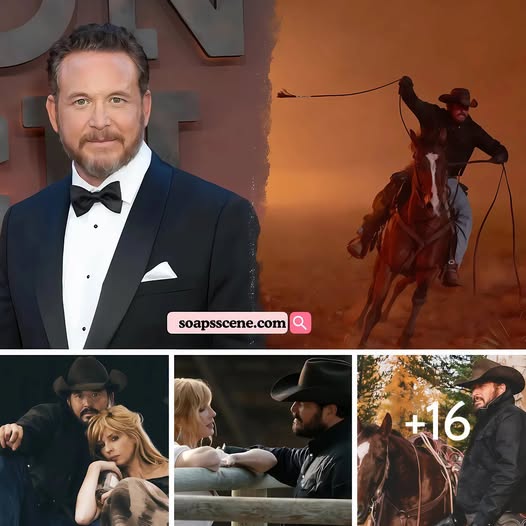
Cole Hauser Was a Star Long Before Rip Wheeler
For millions of viewers, Cole Hauser is Rip Wheeler.
That is understandable.
After years of playing one of the most recognizable characters in the modern Western television landscape, Hauser has become almost inseparable from Rip’s black hat, gravelly voice, cold stare, and unwavering loyalty to Beth Dutton.
But here’s the interesting part: Rip Wheeler wasn’t where Cole Hauser’s acting career truly began.
Long before he stepped onto a ranch and became one of television’s most intimidating antiheroes, Hauser was already building an unusually diverse filmography.
He played criminals.
Soldiers.
Bullies.
Friends.
Authority figures.
And men who looked like they could turn a perfectly ordinary conversation into a very bad afternoon.
That’s why a recent FandomWire ranking of Hauser’s best movies is worth revisiting. The list places five films in particular above the rest: Good Will Hunting, Dazed and Confused, Pitch Black, Tigerland, and 2 Fast 2 Furious.
And while rankings will always be subjective, there’s something revealing about these choices.
They show that the qualities fans love about Rip Wheeler didn’t suddenly appear when Hauser joined the ranch.
They were there decades earlier.
Cole Hauser’s Film Career Deserves More Attention
Rip Wheeler Can Sometimes Overshadow Everything Else
There is a strange problem that happens to actors who find the role of a lifetime.
The role becomes so successful that audiences start forgetting everything else.
For Hauser, that role is obviously Rip.
Rip has become such a powerful part of his public identity that it can be easy to overlook the fact that Hauser was already an established film actor long before Dutton Ranch arrived.
His earlier career included films featuring some of the biggest names of his generation, including Matt Damon, Ben Affleck, Matthew McConaughey, Colin Farrell, and Vin Diesel.
That’s quite a résumé.
The Interesting Pattern Across His Roles
Look closely at the characters Hauser played before Rip.
They aren’t identical.
But they often share something.
Presence.
Hauser has always been particularly effective at playing men who seem dangerous even when they aren’t doing anything.
Sometimes it’s the way he speaks.
Sometimes it’s his physicality.
Sometimes it’s simply the look on his face.
That quality becomes extremely useful when you’re playing someone like Rip Wheeler.

No. 5 — 2 Fast 2 Furious Shows Hauser Having Fun as a Villain
Carter Verone Is a Completely Different Kind of Monster
At No. 5 on FandomWire’s ranking is 2 Fast 2 Furious, where Hauser plays drug lord Carter Verone.
This isn’t the same kind of character as Rip.
And that’s precisely why the performance is interesting.
Verone is wealthy.
He’s polished.
He’s confident.
He’s threatening.
And perhaps most importantly, he doesn’t need to scream to establish authority.
He already knows everyone in the room understands what he’s capable of.
Hauser Makes Silence Feel Dangerous
That’s one of Hauser’s recurring strengths.
He doesn’t always need a huge speech.
He can simply stand there.
Look at someone.
Pause.
And suddenly the scene feels different.
As Verone, that quality works particularly well because the character’s power comes from intimidation.
He doesn’t behave like someone desperately trying to prove he’s dangerous.
He behaves like someone who already knows it.
The Rat-and-Bucket Scene Still Defines Carter Verone
A Brutal Introduction to the Character
One of the most memorable moments associated with Verone is his infamous interrogation involving a rat and a bucket.
It’s disturbing.
It’s excessive.
And it immediately tells the audience what kind of man they’re dealing with.
Hauser doesn’t need to turn Verone into a cartoon villain.
Instead, he plays him with controlled menace.
That restraint is important.
Why the Performance Still Works
2 Fast 2 Furious isn’t generally remembered as the most sophisticated entry in the franchise.
FandomWire notes that the film received only a 37% critics’ score on Rotten Tomatoes, although it performed well commercially and grossed more than $236 million worldwide.
But even people who don’t consider the movie a masterpiece can remember Carter Verone.
And that’s the point.
A great supporting villain doesn’t necessarily need the best movie around him.
Sometimes the actor simply needs to leave a mark.
Hauser does.

No. 4 — Tigerland Reveals Hauser’s Commanding Side
Staff Sergeant Cota Is More Than a Typical Drill Instructor
At No. 4 is Tigerland, Joel Schumacher’s 2000 war drama starring Colin Farrell and Hauser.
The movie follows American recruits undergoing infantry training before deployment to Vietnam.
Hauser plays Staff Sergeant Cota.
On paper, that could easily have become another generic military authority figure.
But Hauser gives Cota something more complicated.
Cota Doesn’t Need the Recruits to Like Him
He needs them to survive.
That’s the key distinction.
Cota is aggressive.
He’s intimidating.
He’s demanding.
But Hauser’s performance suggests there is a practical reason behind that harshness.
The soldiers aren’t preparing for a comfortable experience.
They’re preparing for war.
And Cota understands that better than they do.
Tigerland Shows a Quality That Would Later Define Rip
Strength Without Constant Talking
Watch Hauser’s performance in Tigerland and it’s easy to see a connection to Rip Wheeler.
Not because Cota and Rip are the same person.
They aren’t.
But both characters understand authority without needing to constantly announce it.
They don’t need to dominate every conversation.
Their physical presence does some of the work.
Their eyes do the rest.
The Granite-Stare Effect
This is perhaps Hauser’s most recognizable acting weapon.
He can make a character appear like someone who has already calculated how a confrontation will end.
Rip uses that quality constantly.
Cota uses it differently.
But the foundation is similar.
And that’s what makes Tigerland an important stop in Hauser’s career.
No. 3 — Pitch Black Gave Hauser One of His Most Interesting Villains
William J. Johns Is Not Just Another Bad Guy
If there’s one movie on this list that deserves a serious reevaluation from modern Rip Wheeler fans, it may be Pitch Black.
The 2000 science-fiction thriller strands a group of survivors on a hostile planet where terrifying creatures emerge when darkness falls.
Vin Diesel’s Richard B. Riddick became the character most closely associated with the franchise.
But Hauser’s William J. Johns is arguably one of the movie’s most complicated human threats.
Johns Pretends to Be the Responsible One
At first, Johns presents himself as a lawman transporting Riddick.
That gives him authority.
It gives him credibility.
And it makes the audience want to trust him.
But gradually, cracks begin appearing.
The man who appears to be protecting everyone is increasingly concerned with protecting himself.
Pitch Black Proved Hauser Could Make Viewers Hate Him
The Character Is Almost Uncomfortably Selfish
Johns is wounded.
He’s addicted.
He’s calculating.
And he is constantly thinking about survival.
That makes him different from a straightforward villain.
He isn’t necessarily trying to conquer the planet.
He isn’t delivering grand speeches about power.
He simply wants to live.
And he’s willing to make terrible decisions to accomplish that.
That’s What Makes Johns So Effective
The best villains aren’t always the loudest.
Sometimes they’re the people who make one selfish decision after another until you suddenly realize how dangerous they’ve become.
Hauser plays Johns with exactly that kind of instability.
He is useful enough that the other survivors need him.
But suspicious enough that nobody should completely trust him.
That’s a difficult balance.
And Hauser handles it extremely well.
Pitch Black May Contain Hauser’s Most Underrated Performance
Johns Is More Complicated Than He First Appears
FandomWire ranks Pitch Black third, noting that the film’s audience score was considerably stronger than its critics’ score and that the movie ultimately launched the larger Riddick franchise.
But the bigger point is Hauser’s contribution.
Johns isn’t simply there to give Riddick someone to argue with.
He adds another layer of danger.
The creatures are terrifying.
The planet is terrifying.
The darkness is terrifying.
But the humans are still capable of making everything worse.
And Hauser’s performance makes that danger believable.
No. 2 — Dazed and Confused Shows a Much Younger Cole Hauser
Before Rip, There Was Benny O’Donnell
This is where the list gets particularly interesting.
Dazed and Confused is one of those movies where the cast list alone is enough to make film fans stop scrolling.
The 1993 coming-of-age classic features a remarkable ensemble, and Hauser appears as Benny O’Donnell.
Benny is a football player and part of Randall “Pink” Floyd’s social circle.
He’s not the protagonist.
He’s not the emotional center.
He isn’t even the most important character in the ensemble.
But Hauser fits into the movie’s world naturally.
You Can Already See the Future Rip
There’s an interesting irony here.
Young Hauser already possesses some of the physical confidence that would later become one of Rip Wheeler’s defining characteristics.
Benny carries himself like someone who understands where he stands in the social hierarchy.
He’s confident.
He’s loud when necessary.
And he doesn’t seem particularly interested in questioning the rules of his environment.
That isn’t Rip.
But you can see the DNA.
Dazed and Confused Became a Classic for a Reason
Hauser Benefits From Being Part of a Great Ensemble
FandomWire points out that Dazed and Confused holds extremely strong Rotten Tomatoes scores, with a 94% critics’ rating and 90% audience rating cited in the article.
The film’s staying power isn’t about one performance.
It’s the chemistry.
The atmosphere.
The period setting.
The soundtrack.
The feeling that you’re watching a group of young people experiencing one strange, unforgettable night.
Hauser contributes to that atmosphere without needing to dominate it.
That’s Actually a Sign of Good Acting
An actor doesn’t always need to steal the movie.
Sometimes the best performance is one that strengthens the world around the main characters.
Hauser does exactly that here.
And because the film has aged into a cult favorite, his early performance has become part of the larger story of an ensemble packed with future stars.
No. 1 — Good Will Hunting Is Hauser’s Most Important Movie
The Film That Beats Them All
According to FandomWire’s ranking, Good Will Hunting takes the No. 1 position.
And honestly, there’s a strong argument for it.
The 1997 drama became one of the defining films of its generation.
Matt Damon plays Will Hunting, a young genius struggling with trauma, anger, self-sabotage, and the terrifying possibility of changing his life.
Ben Affleck plays Chuckie Sullivan.
Casey Affleck plays Morgan O’Mally.
And Cole Hauser plays Billy McBride.
Billy Doesn’t Need to Be the Star
That’s what makes the role interesting.
Hauser isn’t trying to compete with Damon.
He isn’t trying to steal scenes from Affleck.
He’s part of Will’s world.
Billy represents the community Will knows.
The friends.
The neighborhood.
The familiar life.
The people who understand him.
And that makes his presence important even when he isn’t saying much.
Good Will Hunting Shows Hauser’s Softer Side
This Is the Role Rip Wheeler Fans Might Not Expect
When audiences think of Cole Hauser, they often think of intimidation.
Rip Wheeler.
Carter Verone.
William Johns.
Staff Sergeant Cota.
Characters who can make a room uncomfortable simply by entering it.
But Good Will Hunting reminds viewers that Hauser can also play loyalty and friendship.
Billy isn’t terrifying.
He’s part of the group.
He jokes.
He hangs out.
He fights.
He drinks.
He cares about his friends without constantly explaining that he cares.
Billy Makes Will’s World Feel Real
That’s important to the film.
Will is exceptionally intelligent.
But intelligence doesn’t automatically make someone emotionally healthy.
His friends are part of the world he understands.
They know his history.
They know his personality.
They know where he comes from.
And that is exactly why leaving becomes so difficult.
Billy helps establish that emotional reality.
Why Good Will Hunting Deserves the Top Spot
The Movie Itself Is Almost Impossible to Overlook
FandomWire cites Good Will Hunting‘s 97% critics’ score and 94% audience rating, along with its nine Academy Award nominations and two wins.
Those numbers matter because Hauser’s performance exists inside an exceptional movie.
The screenplay is strong.
The performances are memorable.
The emotional arc works.
And the movie has endured for decades.
That gives Hauser’s contribution a kind of cultural staying power that some of his other films don’t quite possess.
Hauser Doesn’t Need to Be the Main Character
This may actually be one of the strongest arguments for putting the film first.
A great actor isn’t defined only by how much screen time he receives.
Sometimes an actor’s job is to make the world around the protagonist believable.
Billy does that.
He makes Will’s neighborhood feel lived-in.
He makes the friendships feel authentic.
And he makes the idea of Will leaving that life emotionally complicated.
That’s valuable acting.
The Five Movies Reveal a Pattern in Cole Hauser’s Career
He Keeps Returning to Men With Something to Prove
Look at the five characters.
Carter Verone.
Staff Sergeant Cota.
William J. Johns.
Benny O’Donnell.
Billy McBride.
They are completely different men.
But several share a common trait.
They have strong identities.
They know their place.
They have confidence.
And they rarely over-explain themselves.
That may be the quality Hauser ultimately carried into Rip Wheeler.
Rip Didn’t Come Out of Nowhere
When audiences first meet Rip, he’s already intimidating.
He doesn’t need a ten-minute monologue explaining why people fear him.
His behavior tells us.
His posture tells us.
His relationships tell us.
His history tells us.
And looking back at Hauser’s earlier work, it’s clear that he had spent years developing that screen presence.
Rip Wheeler Was the Perfect Role for Hauser
Everything He Had Practiced Came Together
This is perhaps the most interesting conclusion to draw from the ranking.
Hauser didn’t suddenly become good at playing tough men because of Dutton Ranch.
He had been doing versions of it for decades.
What Rip gave him was something different.
A long-running television story.
More emotional depth.
A complicated romantic relationship.
Family conflict.
Loyalty.
Violence.
Vulnerability.
And time.
Lots of time.
Television Gave Hauser Room to Expand
A movie may give an actor two hours.
A television series can give an actor several seasons.
That means Hauser could explore Rip from multiple angles.
The violent side.
The romantic side.
The protective side.
The damaged side.
The vulnerable side.
The side of Rip that simply wants a home.
That’s why the character became so important.
Which Movie Shows the Most Rip Wheeler DNA?
Tigerland Might Be the Closest Match
If you’re asking which performance feels most immediately connected to Rip, Tigerland might be the obvious answer.
Cota is physically intimidating.
He understands authority.
He isn’t interested in unnecessary conversation.
And he carries himself like someone who has seen enough to know what matters.
That’s very Rip.
But Pitch Black Shows Hauser’s Range
If the question is which movie best demonstrates Hauser’s ability to create a complicated character, Pitch Black might win.
Johns is not simply tough.
He’s morally unstable.
He’s frightened.
He’s selfish.
He’s useful.
He’s dangerous.
That’s a much more layered performance.
Good Will Hunting Shows Why He Shouldn’t Be Typecast
Billy McBride Is the Curveball
This is why the No. 1 ranking makes sense.
Good Will Hunting reminds us that Hauser isn’t simply the guy who walks into a room and intimidates everyone.
He can play friendship.
He can play warmth.
He can disappear into an ensemble.
And he can make a supporting character matter.
That’s a valuable skill.
The Actor Behind Rip Is More Versatile Than Rip
This is something longtime fans already know.
But newer viewers who discovered Hauser through Dutton Ranch may not realize just how much ground his film career covers.
If Rip is the only Hauser performance you’ve seen, you’ve seen only one side of the actor.
And perhaps not even the most surprising one.
Why Fans Should Revisit Cole Hauser’s Older Movies
They’re More Than Just a Trip Down Memory Lane
Rewatching Hauser’s older films isn’t simply an exercise in spotting Rip Wheeler before Rip existed.
It’s a chance to understand his evolution.
You can see how he handles physical authority.
You can see how he creates menace.
You can see how he plays loyalty.
You can see how he disappears into an ensemble.
And you can see how those different skills eventually come together in Rip.
The Earlier Roles Make Rip More Interesting
Knowing Hauser’s history makes his current success more impressive.
Rip feels natural because Hauser has spent decades developing the tools necessary to play him.
The voice.
The stare.
The stillness.
The physicality.
The restraint.
The ability to make a character feel dangerous without constantly shouting.
Those aren’t accidental qualities.
They’re the product of experience.
The FandomWire Ranking Is Debatable — And That’s the Fun
Pitch Black Fans May Want a Different No. 1
FandomWire itself admits that its ranking is subjective and notes that Pitch Black contains the Hauser performance the writer would most like to revisit.
And that’s exactly why rankings like this are fun.
Someone could easily argue that Johns deserves No. 1.
Another fan could choose Dazed and Confused because of the film’s cultural impact.
Someone else might prefer Carter Verone simply because Hauser is having so much fun playing a villain.
And Rip Wheeler fans might choose none of them.
They might say:
“You forgot Rip.”
Fair enough.
But that’s a different discussion.
Cole Hauser’s Career Is Bigger Than Rip Wheeler
Rip May Be His Defining Role, But It Isn’t His Entire Legacy
There is no question that Rip Wheeler has become one of Hauser’s most recognizable performances.
But his film career shows that he arrived at that role with decades of experience.
He had already played villains.
Military figures.
Athletes.
Friends.
Criminals.
And morally complicated survivors.
Rip simply gave all those qualities a larger stage.
That’s Why His Earlier Movies Matter
They show the evolution.
They reveal the actor behind the character.
And they explain why Hauser can make Rip feel so convincing.
He’s not simply pretending to be tough.
He’s spent much of his career understanding how characters with power, anger, loyalty, fear, and pride behave.
So, Which Cole Hauser Movie Is Actually the Best?
Good Will Hunting Has the Strongest Overall Case
If we’re judging the movie as a whole, Good Will Hunting is probably the easiest winner.
It’s critically acclaimed.
It’s culturally enduring.
It’s emotionally powerful.
And Hauser’s performance contributes to the authenticity of the central friendship group.
But if we’re judging Hauser’s individual performance, the answer becomes much harder.
Pitch Black Deserves a Serious Challenge
Johns might actually be the most memorable character Hauser plays in these five films.
He’s unpredictable.
He’s dangerous.
He’s flawed.
And he creates tension without overpowering the movie.
That’s a difficult role to pull off.
The Verdict
Cole Hauser Was Building Rip Wheeler Long Before We Knew His Name
The most interesting thing about this ranking isn’t necessarily whether Good Will Hunting deserves first place.
It’s what the five movies reveal when you put them together.
Cole Hauser has spent decades playing men who carry themselves with confidence, aggression, loyalty, or hidden vulnerability.
Sometimes he’s the villain.
Sometimes he’s the authority figure.
Sometimes he’s the friend.
Sometimes he’s the man nobody should trust.
And sometimes he’s all of those things at once.
That makes his transformation into Rip Wheeler feel less like a career reinvention and more like a culmination.
Rip didn’t come from nowhere.
He was built from pieces of everything Hauser had already learned.
Conclusion
Cole Hauser’s career is a perfect reminder that an actor’s breakout role isn’t always the beginning of their story. For many viewers, Rip Wheeler represents Hauser’s defining performance, but the five films highlighted by FandomWire reveal an actor who had already spent years developing the screen presence that would eventually make Rip so compelling. 2 Fast 2 Furious gave him the chance to play a polished and vicious villain, Tigerland showcased his intimidating authority, Pitch Black revealed his talent for morally complicated characters, and Dazed and Confused captured him as part of a remarkable young ensemble. But Good Will Hunting arguably remains the most important movie of the group because it demonstrates a different side of Hauser — one built around friendship, loyalty, and subtle ensemble acting.

And perhaps that’s the real reason Rip Wheeler works so well.
Hauser didn’t create Rip from nothing.
He brought decades of experience with him.
The intimidating stare was already there.
The physical presence was already there.
The quiet confidence was already there.
The ability to make a character feel dangerous without saying much was already there.
But Rip allowed Hauser to combine those qualities with something his earlier film roles didn’t always have: time.
Time to develop a character.
Time to explore his wounds.
Time to show his loyalty.
Time to show his love for Beth.
Time to reveal the man underneath the black hat.
So if you’ve only watched Cole Hauser as Rip Wheeler, you may want to go backward.
Because the road to Rip didn’t begin at the ranch.
It started decades earlier.
FAQs
1. What is Cole Hauser’s best movie according to FandomWire?
FandomWire ranks Good Will Hunting as Cole Hauser’s No. 1 movie. The article highlights his performance as Billy McBride and argues that his contribution helps make Will Hunting’s friendship group feel authentic.
2. What movies are ranked as Cole Hauser’s best?
The FandomWire ranking places Good Will Hunting first, followed by Dazed and Confused, Pitch Black, Tigerland, and 2 Fast 2 Furious.
3. Who did Cole Hauser play in Pitch Black?
Hauser played William J. Johns, a lawman transporting Richard B. Riddick. As the story progresses, Johns becomes an increasingly dangerous and morally questionable figure among the survivors.
4. Who did Cole Hauser play in 2 Fast 2 Furious?
Hauser played Carter Verone, a wealthy Miami drug lord who uses Brian O’Conner and Roman Pearce in his criminal operation. The role remains one of Hauser’s best-known movie villain performances.
5. Which Cole Hauser movie should Rip Wheeler fans watch first?
Pitch Black is arguably the best choice for fans who want to see Hauser play a darker, morally complicated character, while Good Will Hunting is the better choice for viewers who want to see a warmer and more understated side of his acting. Tigerland is another strong pick for fans who enjoy the commanding, intimidating qualities associated with Rip.