
In the brutal, unforgiving universe of Taylor Sheridan’s neo-Western titan Yellowstone, happiness is rarely a permanent state of being. It is usually a fleeting, fragile luxury snatched in the brief moments between range wars, corporate land raids, and dark trips down the dirt road to the Train Station.
For seasons, the primary emotional anchor keeping fans glued to their screens amidst the violence and political corruption was the fierce, chaotic romance between Bethany “Beth” Dutton (Kelly Reilly) and Rip Wheeler (Cole Hauser).
Theirs was a love story forged in fire and mutual childhood trauma. Beth, the brilliant, damaged corporate weapon with a scorched-earth temper, and Rip, the fiercely loyal, branded enforcer with no legal identity, seemed destined to be tragic star-crossed lovers perpetually standing in the storm.
Yet, as the series progressed through its late-stage narrative arcs, the impossible actually happened: Beth and Rip got everything they ever claimed to want. They were officially married in an iconic, impromptu ceremony on the ranch. They moved into the grand Dutton lodge, stepping into the domestic domain as the established heart of the family. John Dutton gave them his blessing, Rip was elevated into genuine family royalty, and they achieved a level of domestic peace and physical safety that once seemed completely out of reach.

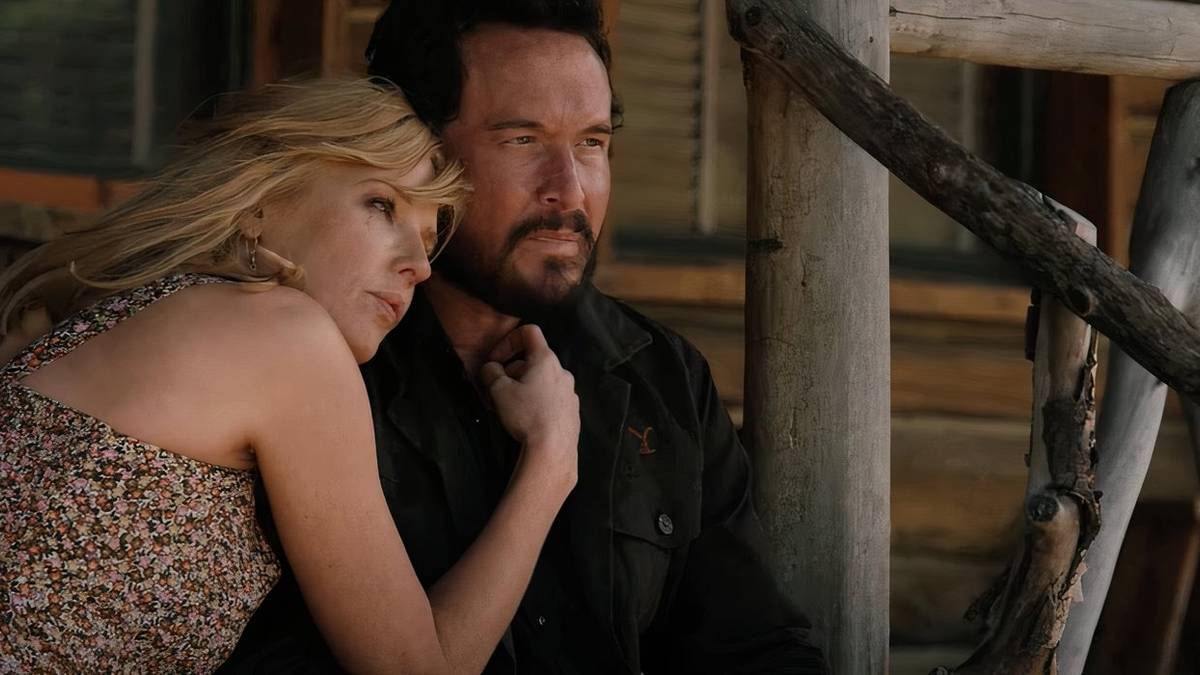
So why, as viewers watch them sit together on the porch overlooking the vast Montana landscape, does their happy ending feel less like a glorious triumph and more like a quiet, tragic eulogy?
The Paradox of the Domesticated Enforcer
To understand why Beth and Rip’s peace feels so strangely hollow, one must look at the fundamental nature of their characters. Both figures were forged, defined, and kept alive by conflict.
Rip Wheeler’s entire identity is rooted in being the ultimate underdog, the outsider, and the shadow guardian. For thirty years, Rip operated as a ghost—sleeping in a modest foreman’s cabin, managing the wild cowboys in the Bunkhouse, and carrying out the dangerous, illegal tasks required to keep the Dutton empire standing. His loyalty to John Dutton was noble precisely because it was selfless; Rip asked for no credit, no legal deeds, and no public status.
When you take a wild, lethal predator out of the shadows and place him inside the grand mahogany halls of the main lodge, a structural dissonance occurs.
Seeing Rip wear the mantle of official family leadership strips away the tragic, romantic edge that made his character so compelling. Rip was built to defend the fortress from the treeline, not to host dinners or sit comfortably in the king’s chair. His domestic elevation doesn’t feel like a reward; it feels like a lion being placed in a comfortable, gilded cage. The quiet peace he now enjoys operates in direct opposition to the violent purpose that defined his entire existence.
Beth’s War-Torn Soul Cannot Rest
If peace feels unnatural for Rip, it is an outright psychological impossibility for Beth Dutton.
Beth’s entire adult life has been a crusade fueled by guilt, rage, and an obsession with protecting her father’s legacy. She weaponized her intellect and traded her personal peace to act as John Dutton’s shield, destroying corporate boardrooms and tearing down anyone who dared look at the ranch sideways.
Her love for Rip was her one sanctuary—a secret, sacred space where she could shed her armor and be vulnerable. The dream of marrying Rip and securing the ranch was the distant light at the end of a long, dark tunnel.
However, Yellowstone brilliantly demonstrates a tragic psychological truth: when a soldier who has lived in the trenches for twenty years suddenly wins the war, they don’t know how to live in the quiet.
Now that she has married Rip and secured her place, Beth’s inner trauma hasn’t magically vanished. Without a clear corporate enemy to destroy or a new fire to extinguish, her chaotic energy turns inward. Her scorched-earth war with her brother Jamie has reached a point of toxic, irreversible madness. The victory feels hollow because Beth’s mind is still wired for battle. She has conquered the mountain, only to discover that the cold wind at the top offers no comfort for a soul that only knows how to burn.
A Victory Built on a Foundation of Ashes
The deepest reason Beth and Rip’s happy ending feels tainted is that the foundation supporting their domestic bliss is entirely built on moral decay and impending doom.
They did not achieve their peace through peaceful means. Their quiet evenings on the porch were purchased with decades of violence, murder, political corruption, and systemic land theft. The “Train Station” is overflowing with the bodies of their enemies. The ranch they are trying to enjoy is financially crippled, drowning in taxes, and surrounded by federal investigators and corporate raiders waiting for the right moment to strike.
Furthermore, the family surrounding them is utterly fractured. John Dutton’s political legacy is collapsing, Kayce is haunted by visions of total ruin, and Jamie is actively plotting the legal and physical destruction of the family brand.
Beth and Rip may have carved out a small pocket of personal happiness, but they are sitting in the living room of a house that is actively burning down. Calling their marriage a “victory” feels like celebrating the pristine condition of the captain’s table on the deck of the Titanic.
The Tragic Genius of Taylor Sheridan’s Writing
In lesser hands, giving a show’s main romantic couple everything they wanted would be a lazy, crowd-pleasing fairytale ending designed to send audiences away happy.
What makes Yellowstone such a brilliant narrative masterpiece is its refusal to grant clean, easy victories. By allowing Beth and Rip to attain their dream while surrounding them with emotional emptiness and impending ruin, the show forces the audience to confront a sobering reality.
In the world of the Duttons, power and land do not bring peace. A wedding ring cannot erase decades of blood spilled in the dirt.
Beth and Rip finally have the wedding band, the grand house, and each other’s unconditional love. But as they look out over the sun-bleached expanse of Paradise Valley, the silence isn’t peaceful—it is heavy with the weight of everything it took to get there. They have won their small personal battle, but the war for the Dutton soul was lost long ago.